
Beverage Sponsorships and the High Profile Sporting Event
The World Cup is the latest and biggest example of a marriage that’s been going strong for centuries.
There’s Big Opportunity, and then there’s the World Cup
For the c-store operator, Super Bowl Season provides one of the biggest retail opportunities of the year. The 2026 Super Bowl generated an estimated $20.2 billion in consumer spending on food, drinks, apparel, decorations, and related purchases, according to the National Retail Federation.
That’s a lot of revenue, and it exceeds the take for any one day of the FIFA World Cup, now taking place as this is being written.
But here’s the thing: the world’s most famous football (soccer) event is a tournament—it doesn’t last just one day like the Super Bowl does. There’s dozens of matches at a variety of sites and they span nearly a month. Collectively, this makes the World Cup the most viewed sporting event in the world across all platforms,[1] and as such, it is projected to generate $40 billion to $80 billion (including tourism, hospitality, transportation, retail, and related spending[2]).
Creating Excitement by Association
The length, visibility, and built-in global audience for the World Cup creates special opportunities in the form of brand sponsorships, long-term agreements through which product exposure comes not just from advertising space, but through merchandise being linked to a high profile event—the goal is to create goodwill by ongoing association.
For example, Michelob Ultra is the Official Beer Sponsor of FIFA World Cup 2026. To make the most of it, they’re going to award a fan-voted Superior Player of the Match MVP trophy in every post-game show broadcast. That’s an extended mention after all 104 matches, which means week after week of the brand being associated with World Cup excitement.[3]
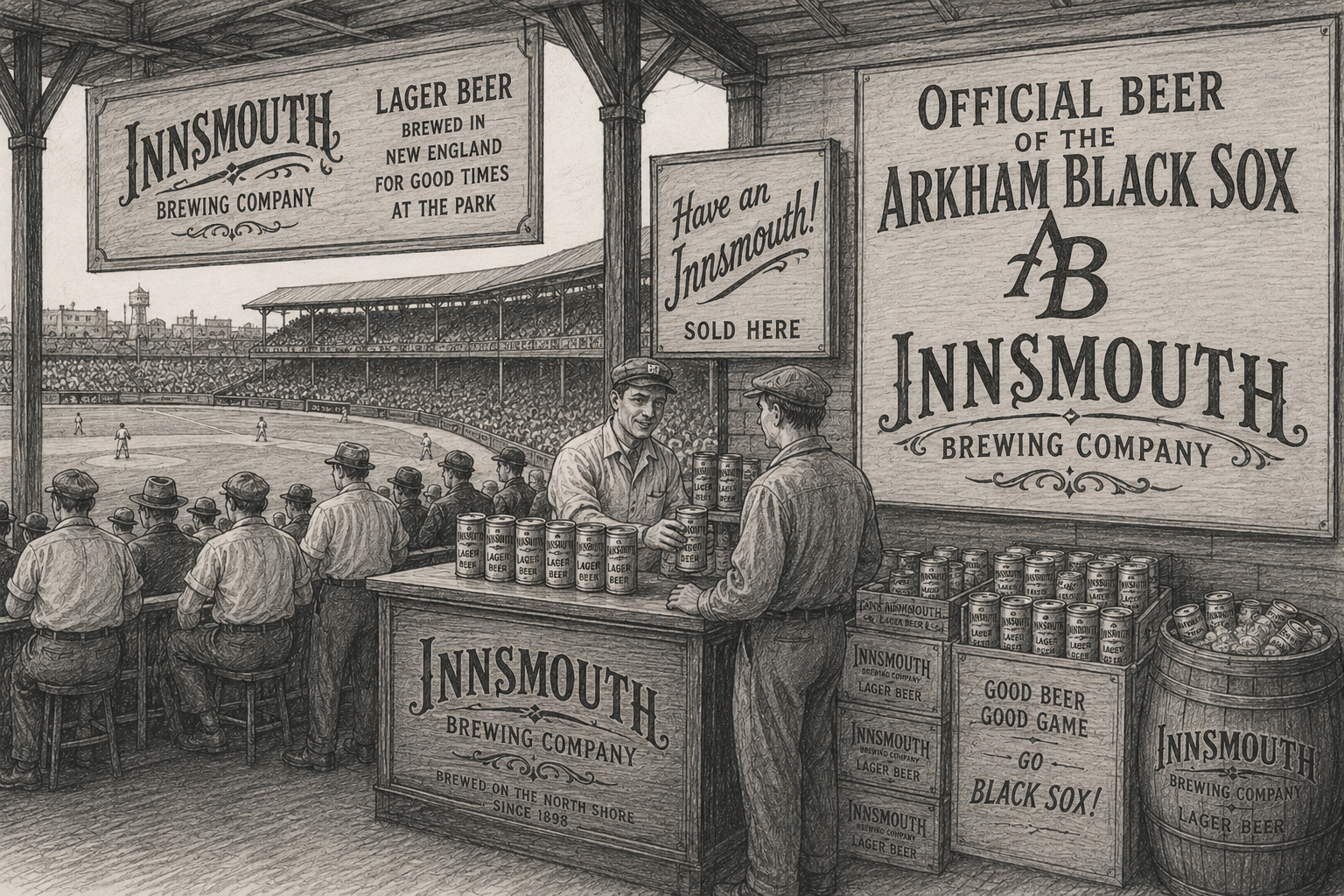
1 AI-generated image of beer/sports sponsorship in a typical 1940’s ballpark.
Sponsorships between beverages and sporting events are nothing new. In America, one of the first public examples was Narragansett Brewing Company, the official beer sponsor of the Boston Red Sox. The relationship started in 1944 and lasted twenty years. That may seem like a long time ago, but in terms of beverage sponsorships, it’s relatively modern.
Beverage Sponsorships through Time
Beverage sponsorships probably go back to the Olympics in Ancient Greece, where wine merchants likely vied to have their latest vintage ready to serve at victory banquets. But that was only the beginning.[4]
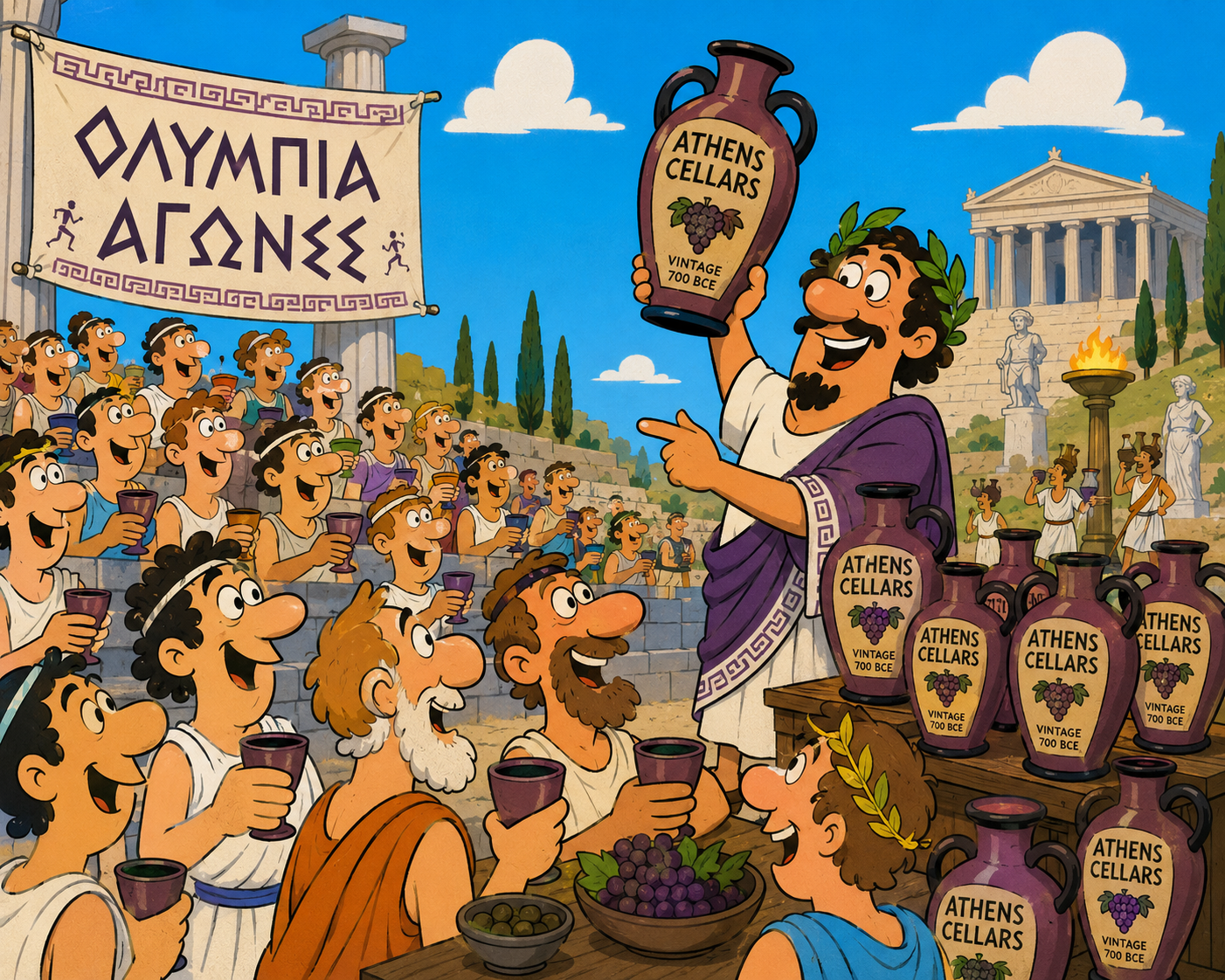
2 Local wine makers would hawk their wares at the ancient Greek games (AI image with direction from SSCS).
Britain: Beer and Cricket (18th–19th Centuries).Village cricket matches were often sponsored or organized by local inns and breweries. Many teams played on grounds adjacent to pubs.[5]
Cycling and Wine Sponsors (Late 19th Century Europe). As bicycle racing exploded in popularity, producers of wine, aperitifs, and other beverages started to sponsor races and riders. The connection was especially strong in France, Italy, and Belgium, where regional beverage producers used sporting events to promote their products.[6]
Coca-Cola and the Olympic Movement (1928).One of the earliest truly global beverage-sports partnerships began when The Coca-Cola Company supplied drinks to athletes and visitors at the 1928 Olympic Games in Amsterdam. Coca-Cola would go on to become one of the longest-running sports sponsors in history.[7]
The Tour de France and Beverage Caravans (1930s).The famous publicity caravan preceding the Tour de France featured beverage brands among its earliest advertisers. Starting in the 1930’s companies distributed samples and souvenirs to crowds lining the route, creating one of the first large-scale mobile sports marketing campaigns.[8]
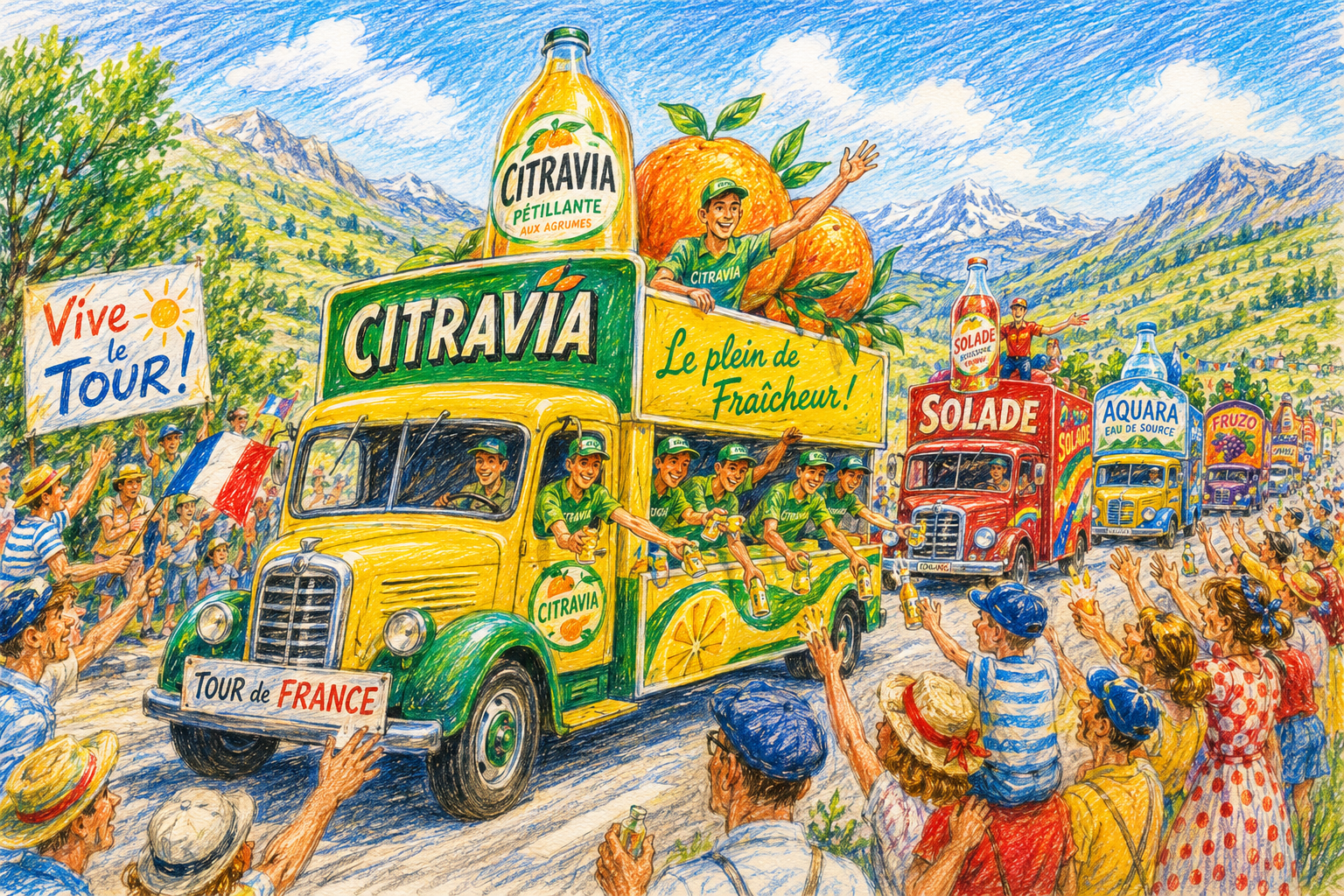
3 AI-generated image of an early publicity caravan (circa 1930) at the Tour de France.
The sponsorships we’ve described are examples of long term partnerships that are mutually beneficial to both parties, kind of like how we, at SSCS, create a lasting connection between those who use SSCS Technology and the improved profitability they enjoy as a result. It’s a strong link, shored up by the fact that we stand behind our customers in support of our outstanding c-store technology, always. If you’d like to find out more about how out solutions can help your c-store grow, please give us a call at (800) 972-7277.
[1] Global Engagement & Audience Report (Executive summary), FIFA Reports.
[2] “The Economic Impact of the World Cup Will Exceed US$40 Bn. Indirect and Induced Effects Could Surpass US $80 Bn. The Brazilian Consumer Spending Case;” Amir Somoggi; LinkedIn Sports and Entertainment Trends; June 18, 2026.
[3] “The World Cup Is Coming to Your Grocery Store,” Phil Lampert; Forbes.com; May 20, 2026.
[4] Food in the Ancient World (Westport, CT: Greenwood Press, 2006), 129–136.
[5] The Social History of English Cricket (Aurum Press, 1999), 30–75.
[6] The Story of the Tour de France (Dog Ear Publishing, 2006), Vol. 1.
[7] See 1928 Summer Olympics Wikipedia Entry
[8] The Tour de France: A Cultural History (University of California Press, 2006), chapters 4–6.


Leave A Comment