

The Mahjong/C-Store Connection
The two go hand-in-hand better than you think.
The SSCS Blog is always on the lookout for new twists on successful c-stores. This week we found one that has regular mahjong tournaments.
What?!
Welcome to the Pierpoint General Store in Columbia, Missouri, established 1889. From the link we’ve provided, you can see it’s as good as a small state park, a homey resort compound with a vast, countrified c-store as a centerpiece. There’s music, food, fun, and community. There’s also a big patio where visitors can play table games.
Like mahjong.
Yeah, it’s unusual, alright, but the connection between c-stores and mahjong isn’t quite the stretch you might think. Especially in an era where it’s more common for c-stores to position themselves, not just as convenience hubs, but as destination sites that encourage consumers to stay a little while.
But first things first.
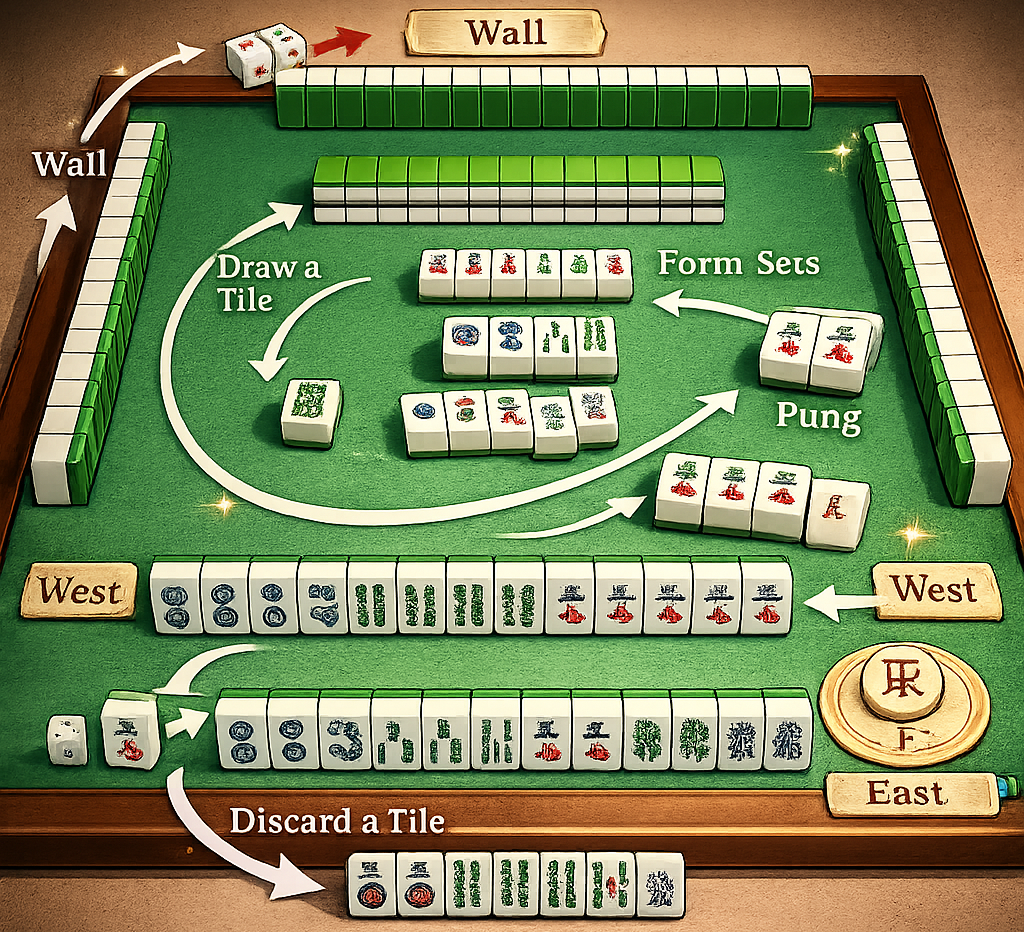
Mahjong is a tile game; the same basic family as dominoes or rummikub. But it’s a lot like a card game, too. There’s four players, tile suits, and sets of suits that must be matched. This post isn’t a handbook on playing, but the following image at above right provides a little context.[1]
Mahjong emerged out of East Asia at the end of the 19th century, and it is here where we first start to see a connection, as c-stores in China, Japan, Taiwan, Korea, and Hong Kong have long achieved success and a global profile by embracing their social potential and turning themselves into cool places to hang out.
That’s a regional thing. There is even a phrase used throughout East Asian countries to describe spaces like these—third places—to differentiate them from the home (first places) and work/school (second places). It’s part of a public social ecosystem that is still alive and well today, and it includes tea houses, corner shops, small eateries, and other spaces designed specifically as neighborhood gathering places.
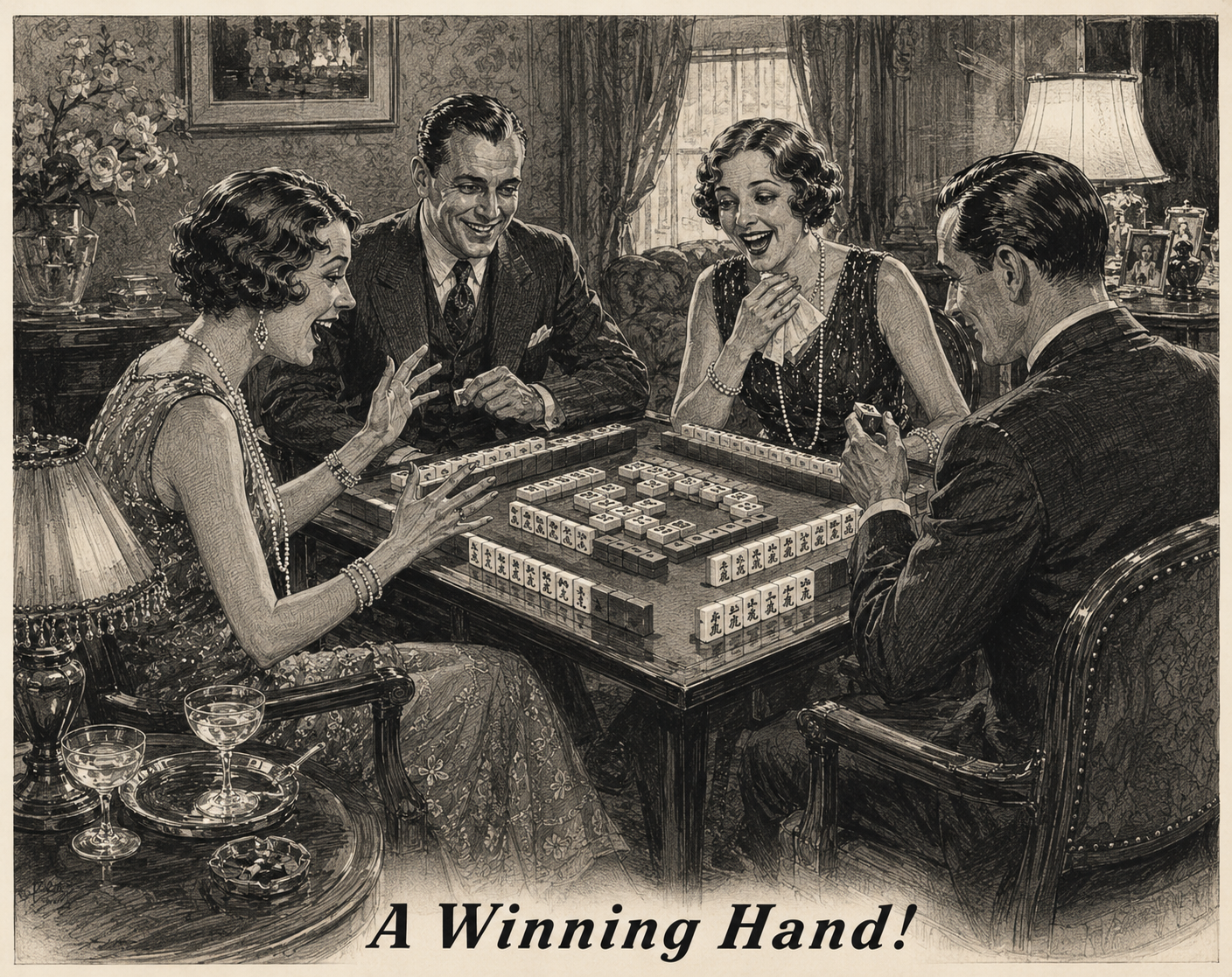
This doesn’t explain how the game got to America, though. Its adoption was largely a gradual, niche interest, until it got a huge boost in the Roaring 1920’s when Mahjong became a flat-out craze— a pop culture sensation that filled parlors, clubs, and high society gatherings.[2]
Now, a hundred years later, we can add c-stores[3] to the list, just another innovation on the road to growth for the industry, which continues to add new wrinkles and incorporate innovations from a wide variety of sources. Though it is an exciting time, it also can prove a little overwhelming for an operator trying to make a profit without c-store technology, or even with the wrong software.
SSCS has been providing technology solutions to the industry since 1981. In that time we’ve been first hand witnesses to the changes in the way the industry conducts business. We’ve also been there supporting our operators with powerful, flexible programs designed by putting our decades of experience into use. If you have specific technology needs, or just want to get an idea of how to practically leverage technology to build profit, give us a call at (800) 972-7727. We’ll even show you how to scan in a pack of Mahjong tiles!

[1] If the image looks interesting enough for you to seek out more information, this is a good place to start.
[2] Annelise Heinz, “Mahjong, American Modernity, and Cultural Transnationalism” (PhD diss., Stanford University, 2014), Stanford Digital Repository.
[3] Maybe because of the spike in interest caused by the 2018 movie, “Crazy Rich Asians.”





Leave A Comment