
Register to POS (Part 2): The Search for a Usable Barcode
There wouldn’t be a history of the POS without a history of the barcode.
The Lightbulb in Silver’s Head
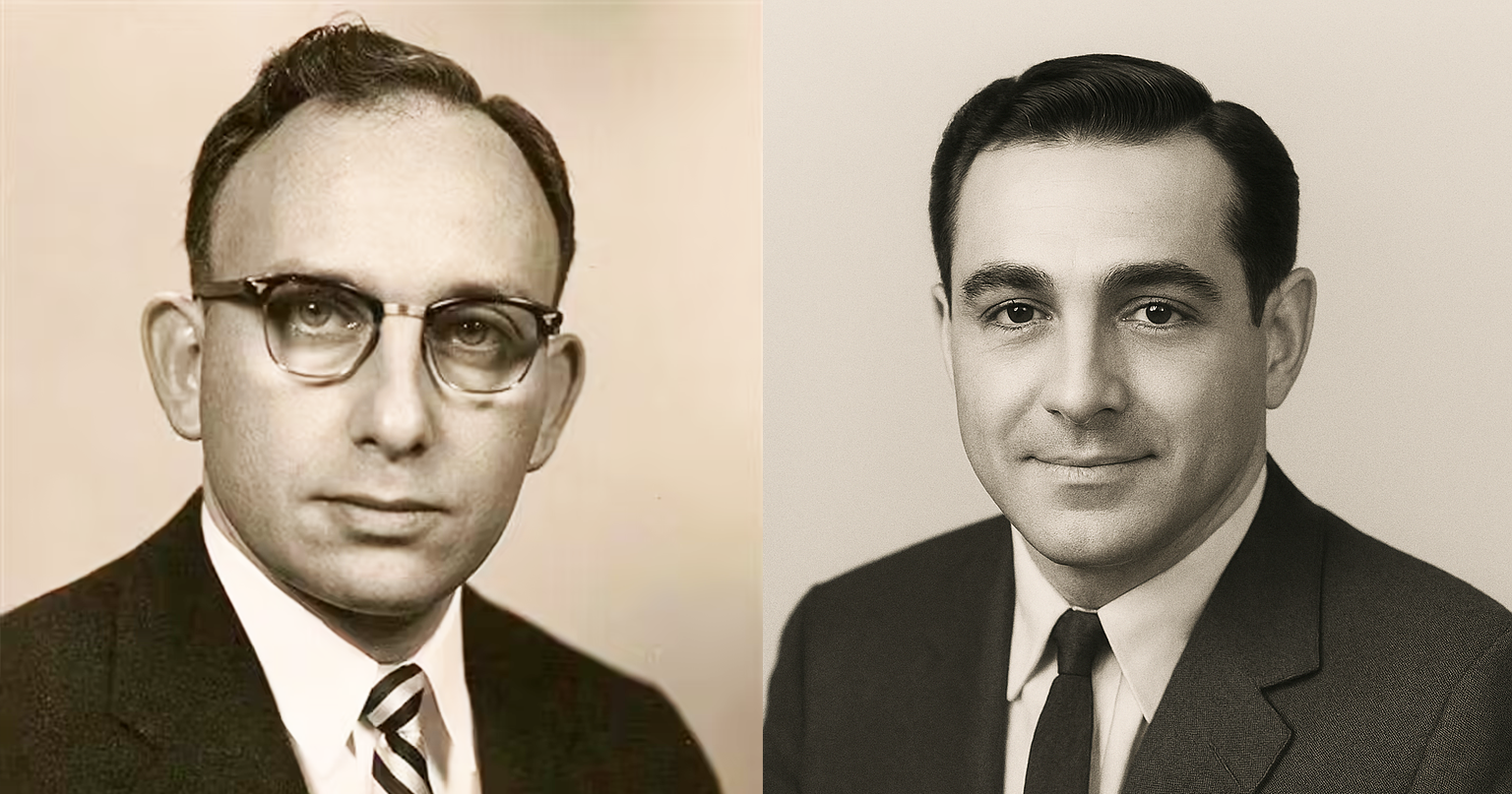
1 Woodland (L) and Silver (R). Woodlard: Unknown photographer ca. mid-20th century. Silver: AI generated composite portrait created with M365 Copilot May 12, 2026.
Readers might recall that in Part One of this SSCS Blog series, we took a look at the development of the cash register up until the invention of the bar code. That was in 1949. We’ll eventually end up at the modern POS next week, but in the 25-year gap between the two, well, that’s how long it took to come up with a usable barcode system, and there’s no POS without a barcode system.
Why did it take until 1974 to get a barcode used in a commercial setting[1]? And just what were Woodland and Silver thinking when they invented it in the first place?
They were thinking retail grocery, as it turns out. Silver overheard a grocery executive ask a dean at Drexel Institute of Technology whether a system could be developed to automatically read product information. That’s when the light bulb went on in Silver’s head.
An Idea Ahead of Its Time
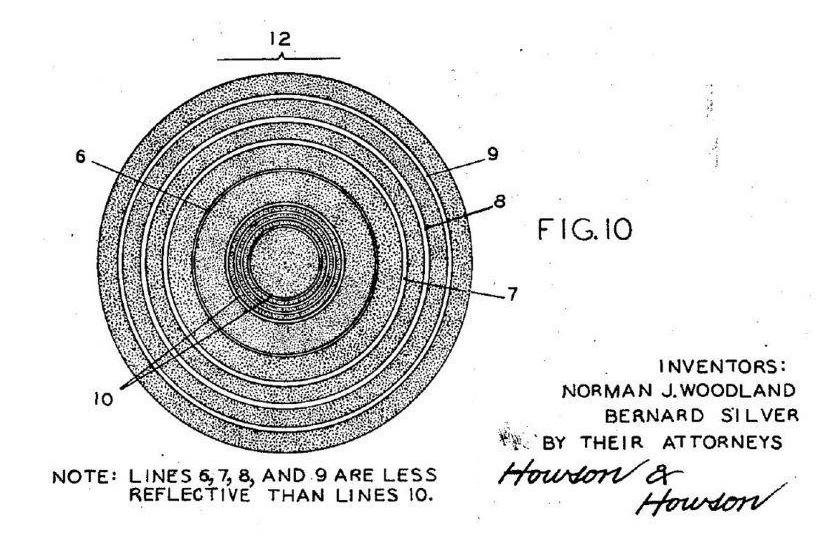
2 “When Did Barcodes Come Out? Barcode History, First Scan, and Future Timeline (1948–2027)”; Terra Digital, April 22, 2025
The basic principle of the barcode system hasn’t changed since its invention: encode product information in a machine-readable visual pattern that can be instantly scanned and linked to a database somehow.
That’s not to say the barcode hasn’t gone through an evolution, though. In fact, early barcodes looked like bullseye targets, because that was the only way researchers could figure out how to scan in any direction. Believe it or not, It was the only barcode shape for decades, with the most well-known test in the early 1970’s at a Kroger supermarket in Cincinnati.[2]
Problem was, the tech of the time couldn’t support the barcode as a retail solution, no matter what its shape. Database technology, for example, was so big and so expensive, a small business could never consider it.
There were plenty of other problems, too, and these persisted throughout the 1950s and 1960s. For one, the systems used a 500-watt lamp to bounce off of the targeted pattern.
The system also required a photoelectric sensor connected to an oscilloscope weighing about 75 pounds. And even then, there was no way to connect the signal to item merchandise information, meaning scanning at the register remained a science fictional concept until the 1970s.
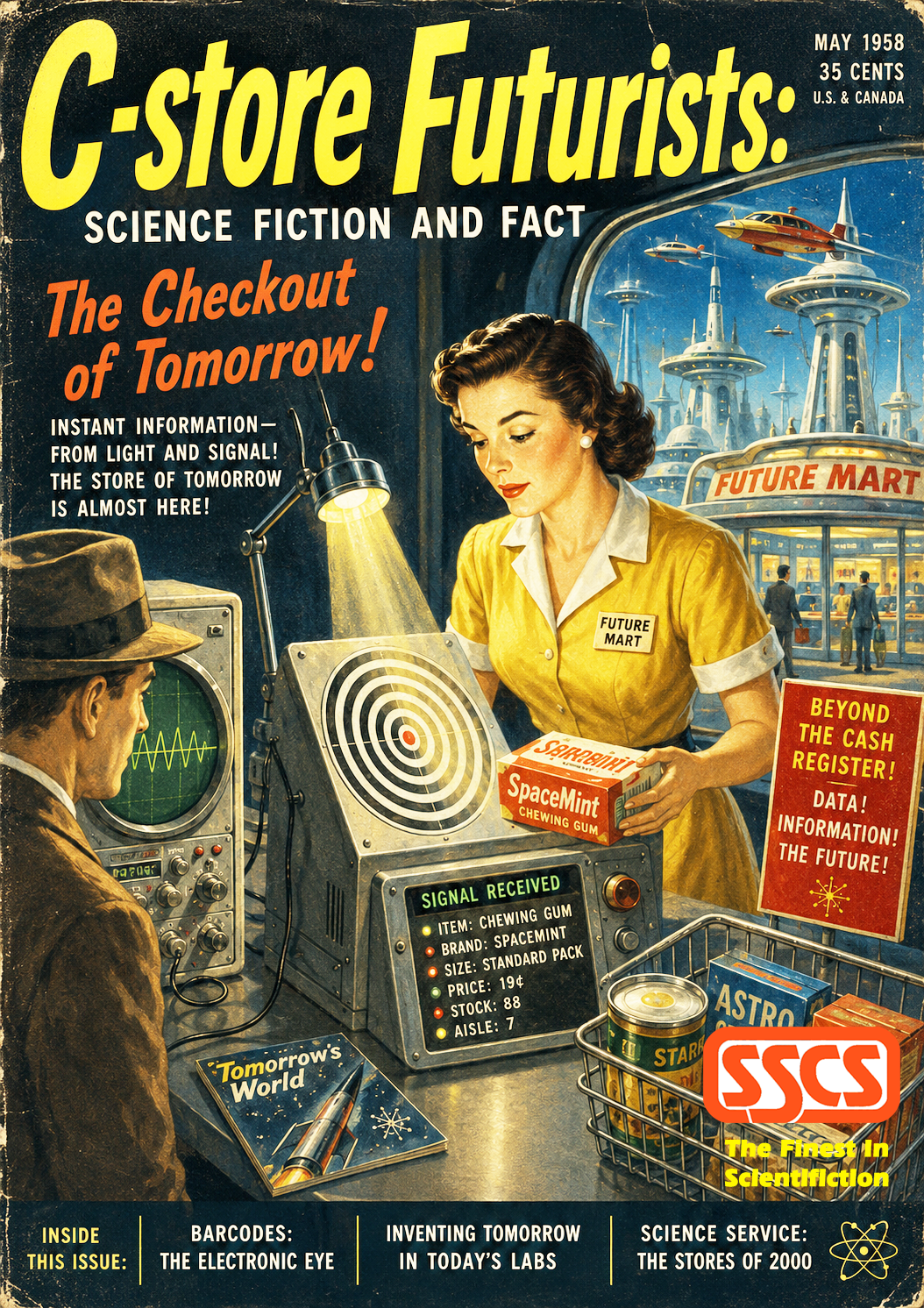
3 AI-generated image of 50s SF magazine; concept and direction by SSCS.
Seeing the (Laser) Light
Despite the limitations of the equipment at their disposal, entrepreneurial scientists and inventors continued their efforts to make retail tech more commercial. Then in 1960, Theodore Maiman, an American physicist trained at Stanford University, demonstrated, for the first time, a synthetic ruby light: the laser beam,[3] the second great game changer in the history of the POS.
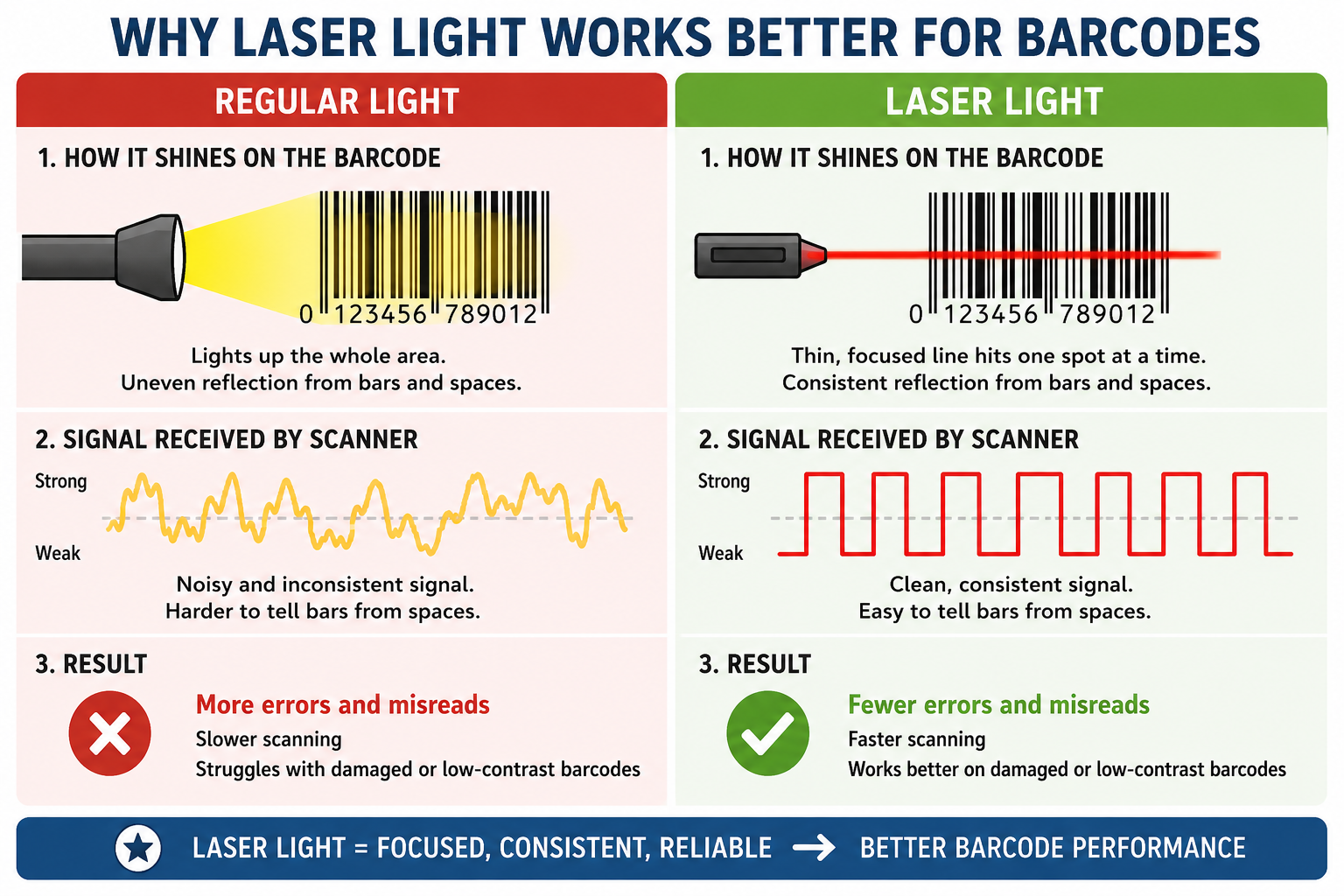
Laser light was the result of scientists’ search for what they called “perfectly controlled light,” single‑wavelength, tightly directed, aligned in phase, and moving together in an organized beam.
You can’t do that with normal light because it diffuses—spreads all over the place, even when you are blasting 500 watts of it. That’s lousy for barcodes; they need to be read with great precision.
But as can be seen from the comparison chart below, laser light is another thing altogether. Which was lost on no one given the avalanche of merchandise coming down the retail sales pipeline and the inability of retailers to handle it.
Work on a practical solution continued. Tackling the size of the equipment was a high priority, including shrinking the scanner and getting rid of the oscilloscope. Database candidates that might be used with these systems were getting smaller and cheaper, too. And true technological breakthroughs, like semiconductor and helium-neon lasers, helped.
The question remains though: how did this tech integrate with the machines once known as cash registers, and just what did prototype POS systems and their descendants look like? The answer has as much to do with assembling compatible technologies together, as it does with computing speed, power, and miniaturization, as we’ll see next week.
[1] Encyclopedia Britannica. “Theodore H. Maiman.” https://www.britannica.com/biography/Theodore-Maiman. “The First Half‑Century of Laser Development.” Wiley Online Library.
[2] Wilde, Renee; “50 Years Ago, the First Retail Barcode Was Scanned at an Ohio Grocery Store;” Ideastream Public Media; June 25, 2024.
[3] “Barcode,” Encyclopedia Britannica, last modified, https://www.britannica.com/technology/barcode (noting the first commercial barcode scan on June 26, 1974, in Troy, Ohio).





Leave A Comment