
Psyched!
Retail psychology tries to get into the consumer’s head—in a good way.
The Art of Understanding Customers
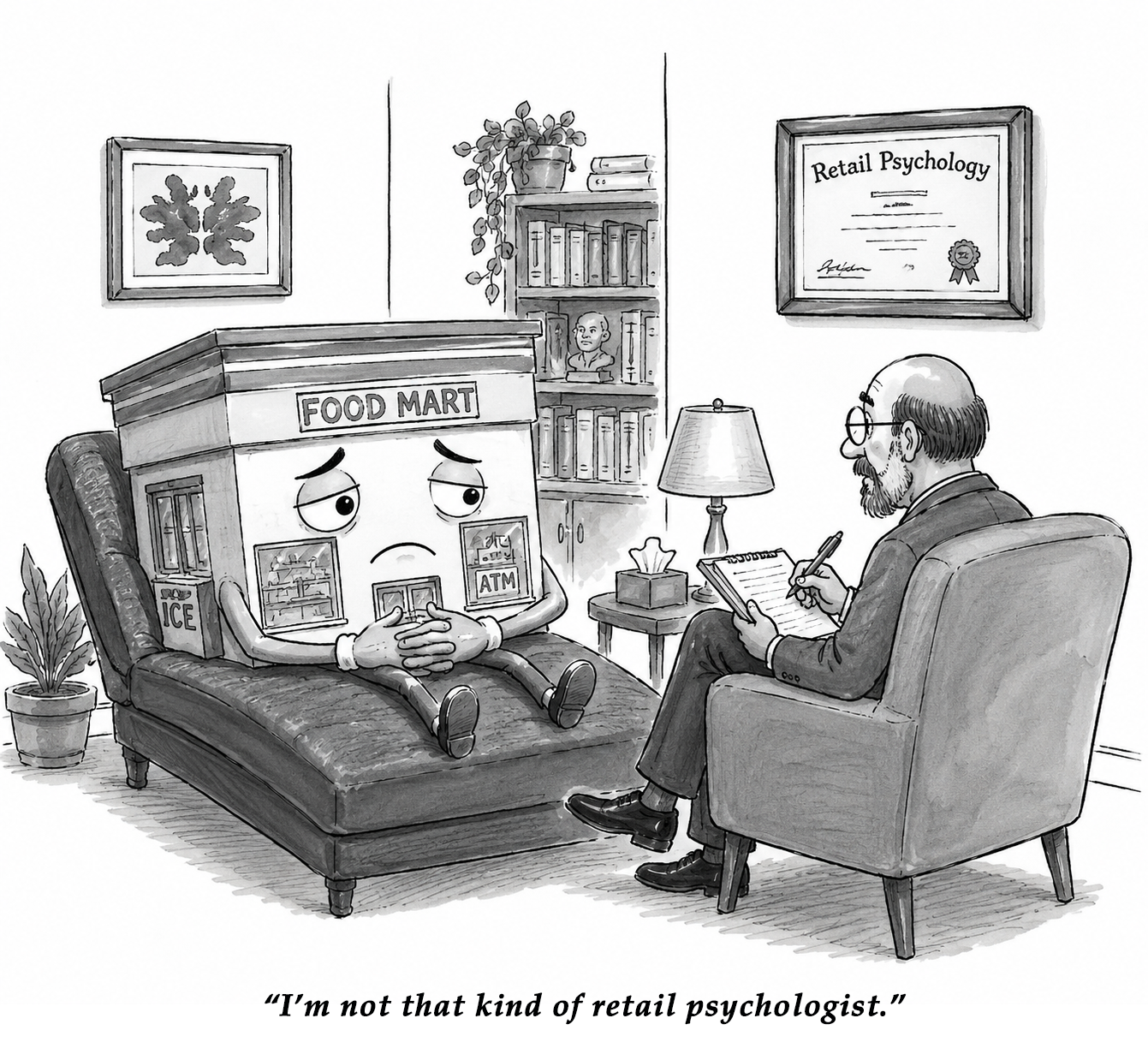
Retail Psychology is the science—and art—of understanding why customers buy what they buy[1]. If you can figure out how to do that as an operator, the theory goes, you can tweak your shopping environment and its adjacent parts to create, influence, and encourage loyal customer behavior.
Actually, for something so basic, “Retail Psychology” seems kind of a hifalutin’ term. It’s not like Freud and Jung had store management in mind when they developed modern psychiatry and psychology, though it’s kind of fun to think that maybe they did.
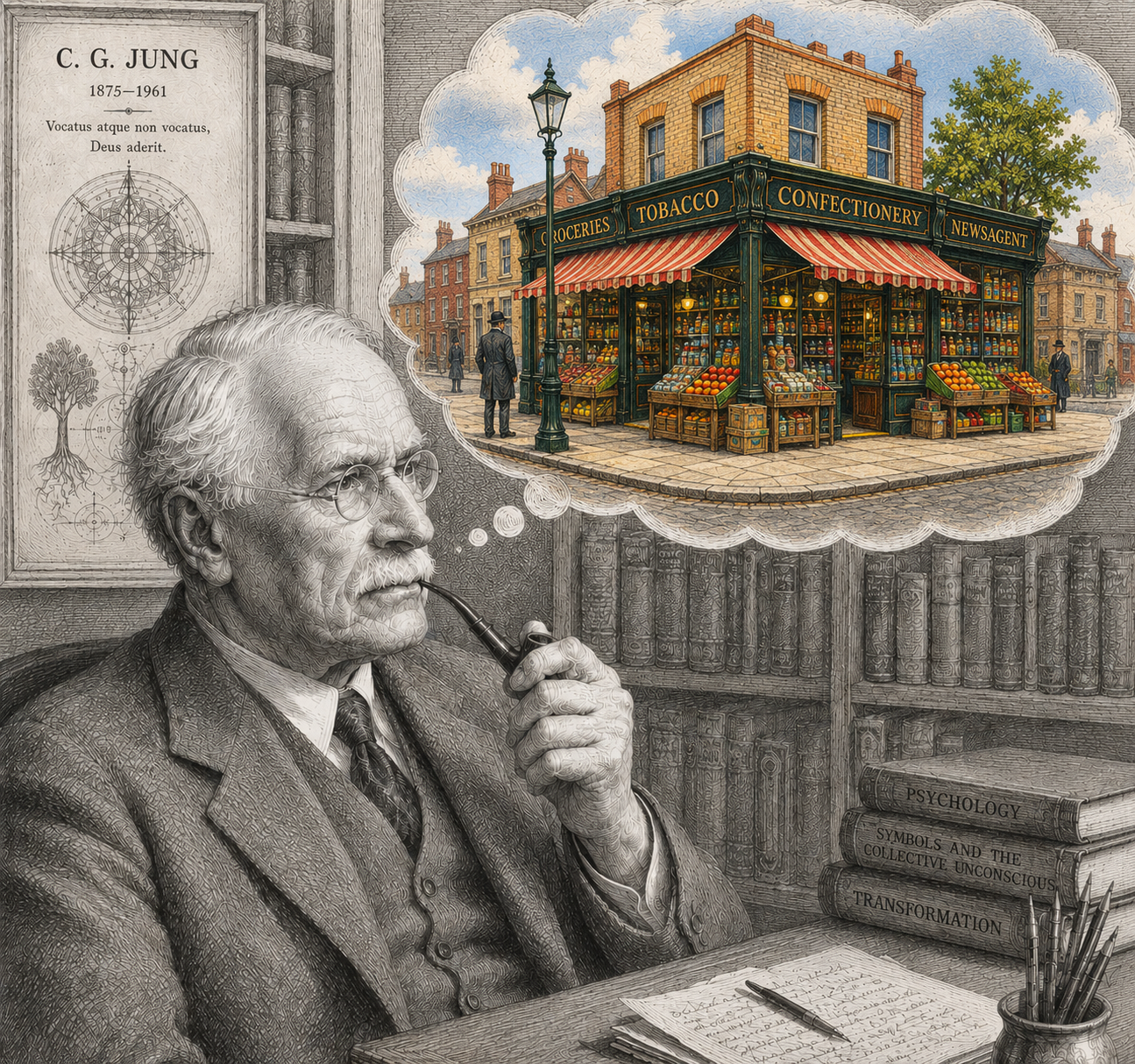
Carl Jung probably didn’t have store owners in mind, but what if he did?
Built by Retailers
In reality, though, it was the retailers of that era that put together, without any formal plan, the first planks of what would eventually become Retail Psychology’s framework.
Those fundamentals remain formally unchanged today. They’re shopkeeper strategies based on on first-hand observations and experience: goods near the entrance move quickly, being friendly makes customers want to come back, colorful displays attract attention. That stuff still holds true today.
So how did Retail Psychology grow more complex? Turns out the Industrial Revolution had a lot to do with it.
The Industrial Revolution Re-Defines the Store
In the sparse, slow, spread out retail landscape of the mid-1800s, the small town hospitality and common sense approach we described in the previous section was enough to get people inside the door. At the end of the 19th Century, though, with the advent of the Industrial Revolution, competitive pressures got more complicated, and came from different directions.
Merchandise became available faster and cheaper than ever before—and there was way more of it to choose from. Steam trains led to a transportation boom. Increasingly sprawling population centers contained more retail opportunities, but multiplied competitive challenges, too.
The Store as Family Destination
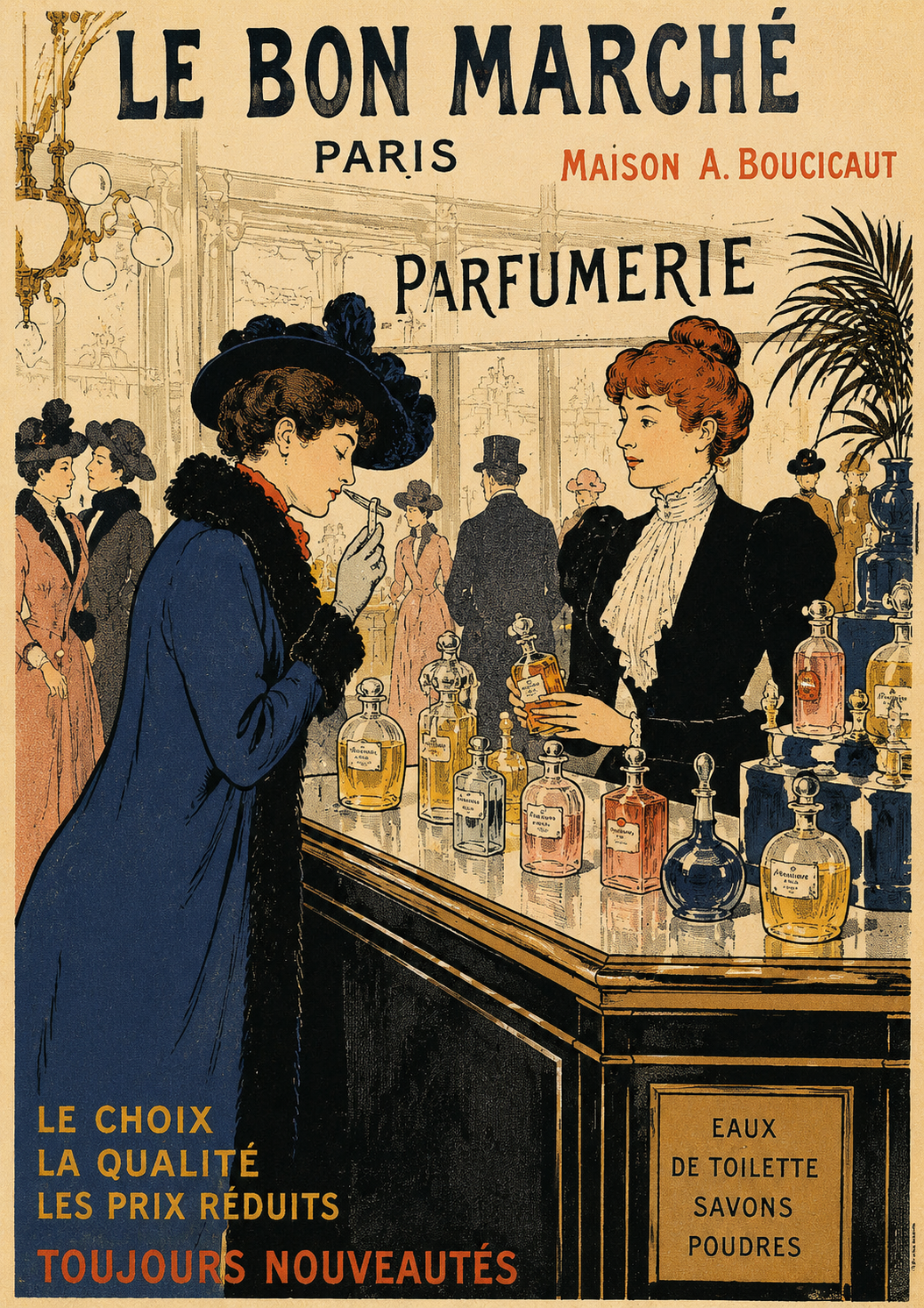 Motivated retailers looking for an edge began to realize they needed to put some more thought in what they were doing to attract customers. One not-so-subtle approach to differentiate emerged early: get big—as big as you could—and carry as many of these newly accessible products as possible.
These late 19th–early 20th Century stores have become kind of legendary over time for their elaborate window displays, gourmet restaurants, seasonal changes, and all-around attractive interiors. A dash of showmanship was involved. Call it the retail outlet as family destination, featuring the retail operator as ringmaster[2].
There was Bon Marche’ in Paris, Marshall Fields in Chicago, and Selfridges in London—the latter of which is immortalized in a PBS Masterpiece Theater series.
An Unprecedented Opportunity
But turning your store into an amusement park wasn’t practical for anybody but the most well-resourced of retailers. Most operators needed to utilize Retail Psychology on a smaller scale. Their opportunity came with the rise of the self-service supermarket in the 1930s and 1940s.
In a self-service supermarket, customers stuck around for a little while. For high-achieving retailers, this made their store a lab for observing customer behavior—how shoppers moved through aisles, where they paused, and which products seemed to catch their attention. The store manager could experiment with end-cap displays, impulse items at checkout, signage, and cart design. Or find out if “.99” psychological pricing worked. All within a controlled environment.[3].
By the 1970’s, the value of predicting consumer behavior was more in fashion than ever. Some universities offered it as an academic discipline, working not just psychology into the mix, but economics, sociology, and marketing, too. Many techniques that retailers had discovered through experience were now being tested, measured, and refined further through scientific research[4].
The Influence of Data
Fifty years later, c-stores find themselves slicing and dicing more customer-related variables than ever before, thanks to the proliferation of data available in the Information Age. Of course, without context or insight, this granular view of customer behavior can turn into a baffling flood of information before you know it.
With the right tools, however, like SSCS’s Computerized Daily Book back office system and Transaction Analysis, you can stay on top of the indicators and get the additional insight they contain, including the performance of multi-item promotions, loyalty and discount programs, time frames, and even locations in the store. Sales histories and projections are another valuable part of the mix, a way of predicting consumer behavior.
Retail Psychology didn’t begin in the convenience store, but successful operators practice it every day. If you’re interested in seeing how our software can help you get a handle on customer wants and needs, give us a call at (800) 972-7277 and we can chat.
[1] Underhill, Paco; Why We Buy: The Science of Shopping; New York, Simon and Shuster, 2009.
[2] Michael B. Miller, The Bon Marché: Bourgeois Culture and the Department Store, 1869–1920 (Princeton, NJ: Princeton University Press, 1981), 3–21; William J. Hausman, The Industrial Revolution (Westport, CT: Greenwood Press, 2003), 67–96; Robert C. Allen, The British Industrial Revolution in Global Perspective (Cambridge: Cambridge University Press, 2009), 173–208.
[3] Clarence Saunders, The Story of Piggly Wiggly (Memphis: Saunders-Blackburn Grocery Co., 1928); Paco Underhill, ibid, 19–66; Michael Levy, Barton A. Weitz, and Dhruv Grewal, Retailing Management, 11th ed. (New York: McGraw-Hill, 2024), 432–468.
[4] John A. Howard and Jagdish N. Sheth, The Theory of Buyer Behavior (New York: John Wiley & Sons, 1969); Michael R. Solomon, Consumer Behavior: Buying, Having, and Being, 14th ed. (Harlow, UK: Pearson, 2024), 5–28; Leon G. Schiffman and Joseph L. Wisenblit, Consumer Behavior, 13th ed. (Harlow, UK: Pearson, 2023), 4–18.


Leave A Comment