
Flying Under the Radar in the Great Outdoors
The best thing about U.S. road tripping is that there’s always a new destination left to explore.
Welcome to the SSCS Blog’s 2026 Road Tripping post. It wasn’t meant to be a series, but we keep coming back to the subject again and again in the summer because: 1) the U.S. offers an almost unlimited supply of interesting destinations; 2) retail petroleum is an integral part of the road tripping scene for food, fuel and more—it’s always a relevant topic.
This year we’re emphasizing destinations in which the great outdoors is a huge part of the appeal. Our four picks have something else in common, too: they tend to fly under the radar. But while they may not be top of mind with the general public, they do have plenty to offer. Let’s take a look.
Whale Island; Samuel H. Boardman State Scenic Corridor, Oregon
There is an absolutely huge stretch of coastal land (12 miles from north to south) that runs along a patch of the southwestern Oregon border. Even though Interstate 101 runs through it, most drivers don’t notice they’re rolling through Samuel H. Boardman State Scenic Corridor.
The Oregon coast has its own rough beauty, and it’s all on display here (you may have to pull off the highway more than once to take it all in). Sea stacks, natural bridges, secluded coves, and sweeping views of the Pacific Ocean are all part of the appeal. However, the quirkiest part of the park may well be Whale Island, right off the shore, which certainly lives up to its name.
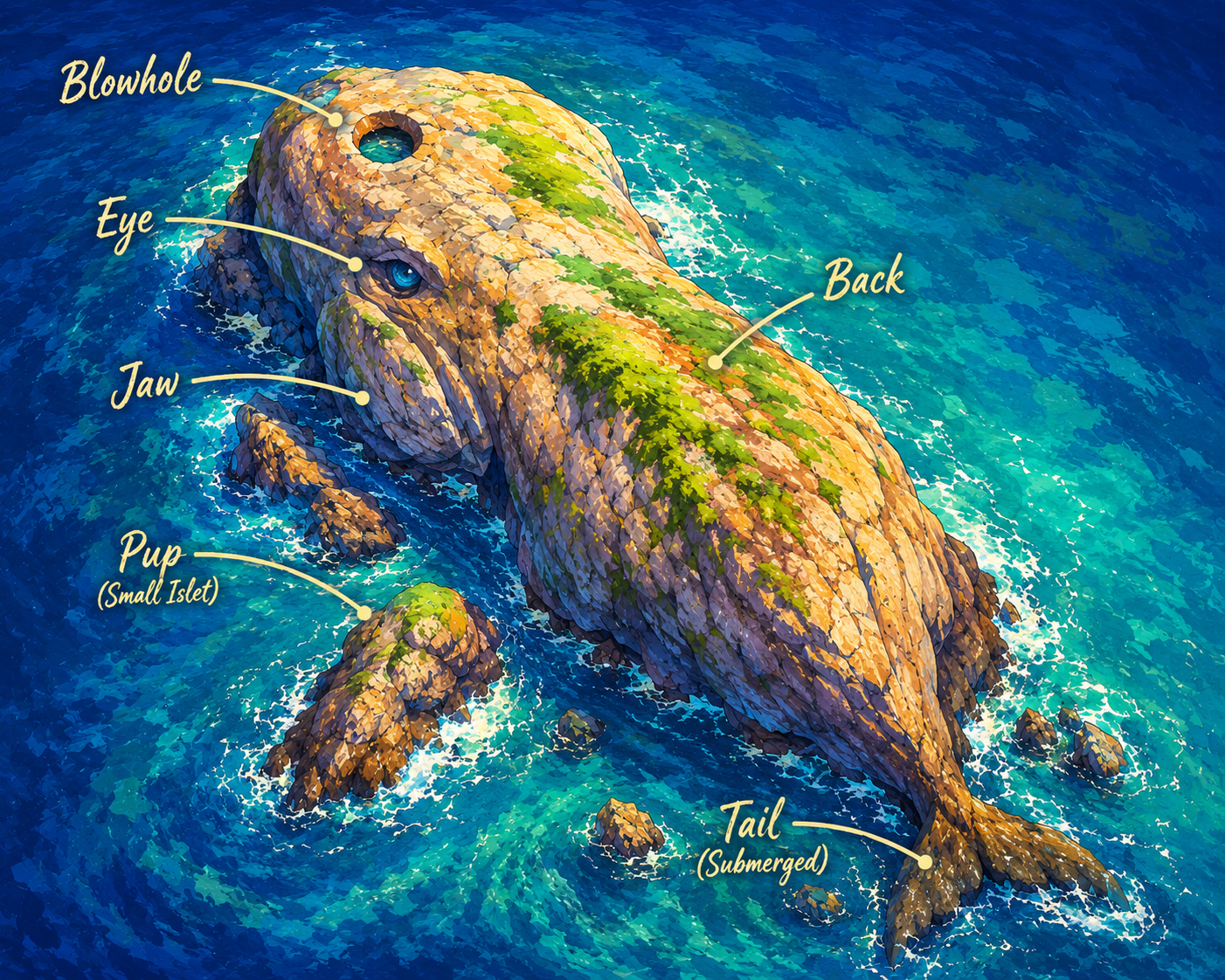
Whale Island
A Mining Town in the Switzerland of America; Ouray, Colorado
The area around Ouray is called the “Switzerland of America,” but it’s mostly because of its natural surroundings: it sits about 7,800 feet up, at the bottom of a mountain bowl surrounded by peaks as high as 13,000 feet. For an Alpine environment, there’s plenty to do in the summer, too: hiking, mountain biking, four-wheeling—and visiting Ouray, the town, population 989.
This may be the Switzerland of America, but don’t expect Ouray to have the vibe of a Swiss village. Ouray is a different kind of cool, instead, a preserved mining town that came together in the 1870’s when gold and silver were found in the San Juan Mountains. It’s more accurate, then, to say Ouray is a Victorian oasis dwarfed by the towering mountain walls rising on each side.
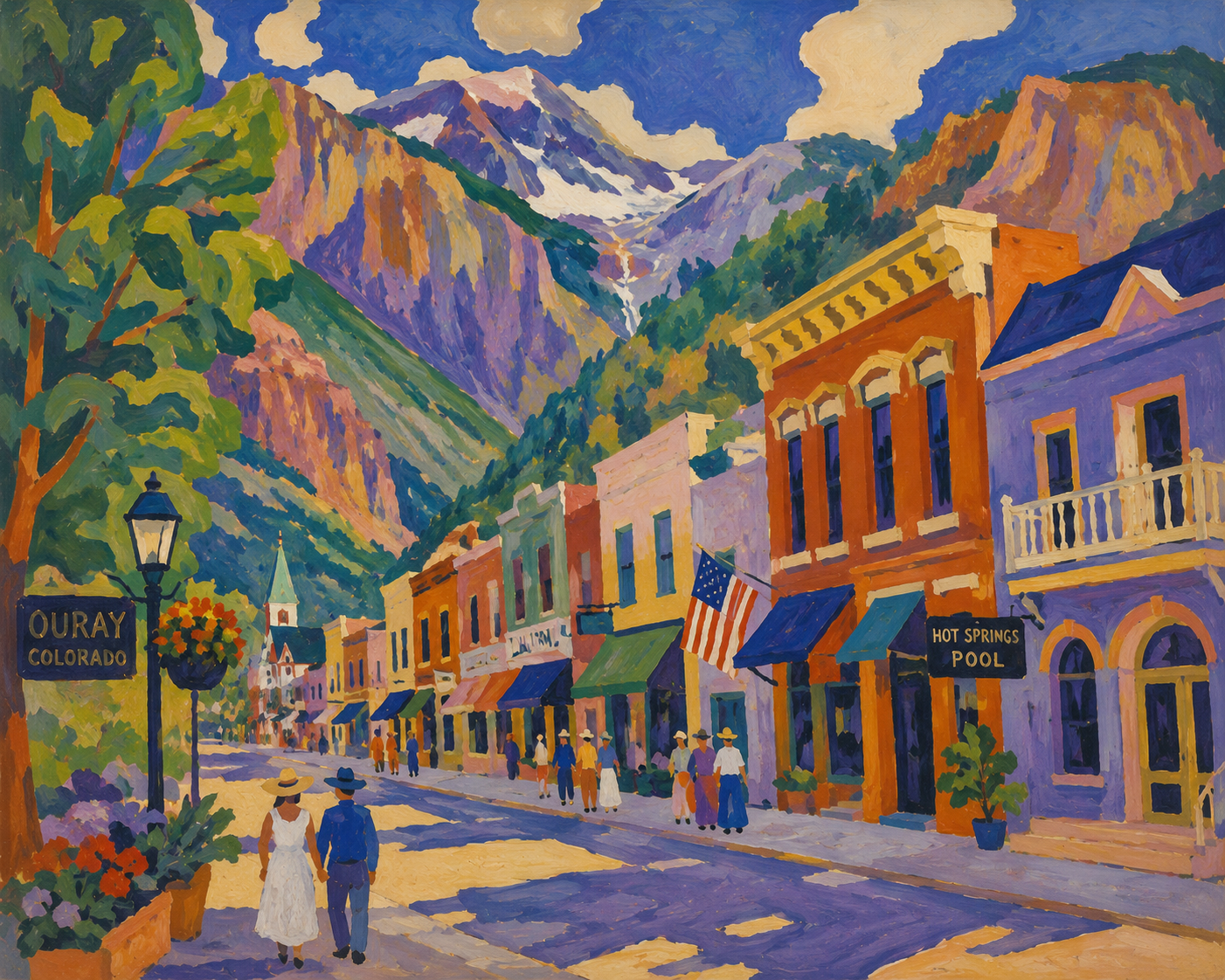
Ouray, Colorado
The Lehman Caves; Great Basin National Park, Nevada
Great Basin National Park is one of the least visited national parks in the U.S. Its location in the middle of eastern Nevada (a.k.a nowhere) has something to do with that. Still, if you like really getting away from it all, you could do a lot worse than the camping and hiking here, under the stars, among mountain lakes and bristle cone pines, listening to the sounds of the surrounding desert at night.
Or you could beat the heat by descending into the park’s main attraction.
That would be the Lehman Caves, earthen rooms filled not just with stalactites and stalagmites, but with over 300 shield formations that look like round or oval disks projecting out from cave walls, ceilings, and floors. Most caves only have one or two; it’s a distinctive attribute for a cave to have so many.
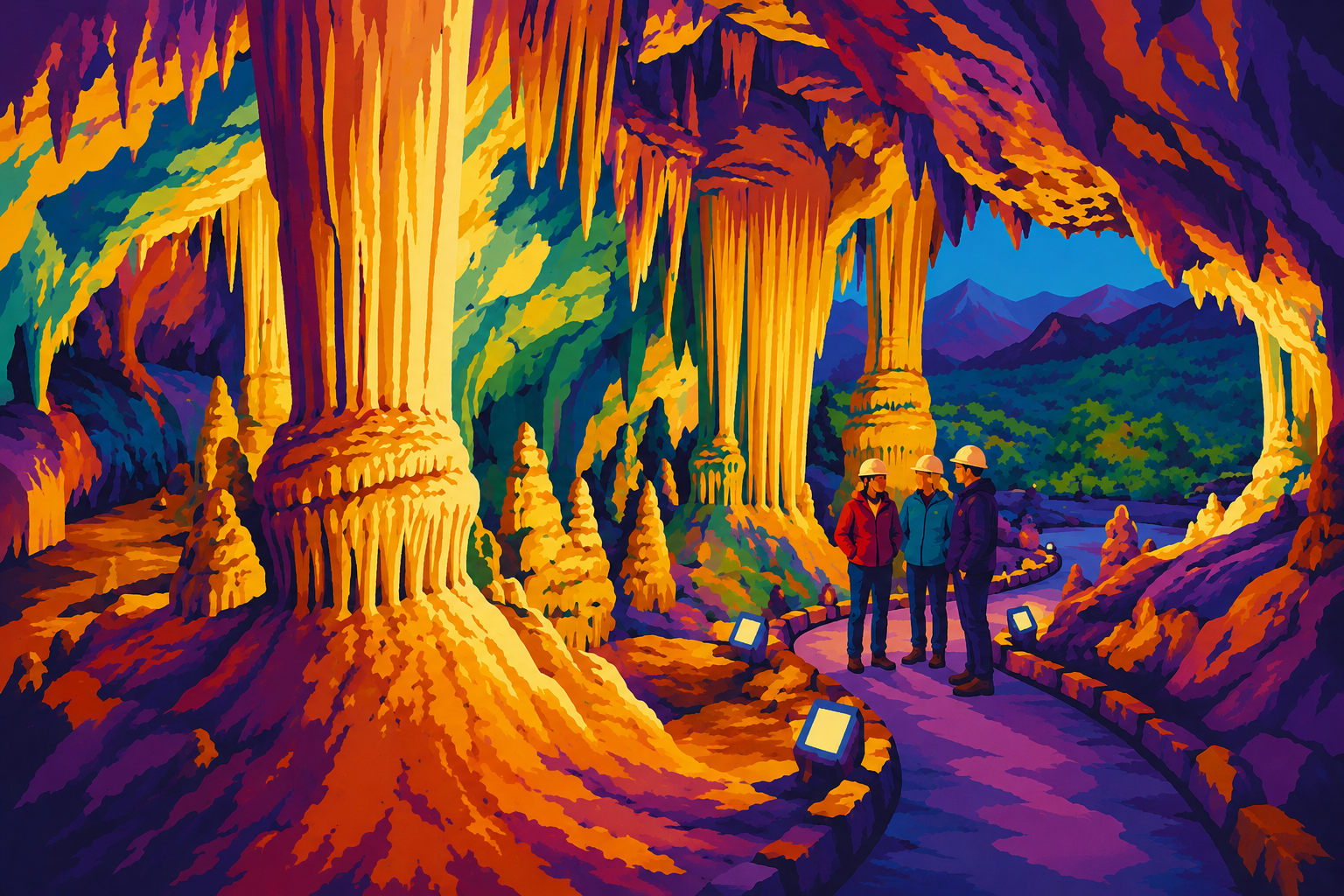
The Lehman Caves
Dungeness Mansion, Cumberland Island National Seashore, Georgia
Cumberland Island National Seashore is a protected barrier island on Georgia’s Atlantic coast. You have to park first and then gain access by ferry. There you’ll find 10,000 acres of designated wilderness, full of undeveloped beaches, maritime forests, and free-roaming horses (!) Campers love it.
Among all that natural, unrefined beauty, the park’s show stopper actually turns out to be a man-made one, although it has seen better days. We’re talking about the 59-room ruin known as the Dungeness mansion. Once a lavish Carnegie family estate, it burned in 1959 and now rises from the land like something out of a Southern Gothic novel. It doesn’t seem to bother the horses, though.

Dungeness Mansion
This week’s road tripping has taken us to some rather remote locations without the services you’d find in more urbanized areas. Travelers to these places have to plan ahead and stock up before they hit the road. After all, where they’re going, c-stores will be few and far between.
That creates an opportunity for convenience store operators. Of course, you have to know the buying patterns of these longer-haul customers, not only from the perspective of their needs, but from the perspective of whether the items they want work for you from a profitably standpoint.
Getting this kind of insight from the numbers is increasingly difficult to do without c-store technology. Comprehensive sales information, broken down and organized to make sense, in a time frame that still matters, almost always requires software. Products like SSCS’s Computerized Daily Book back office make it practical to define and track performance with a fine tooth comb, and figure out what it means. If you’re the last outpost for travelers who want a little quiet time mixed into their adventures, give us a call at (800) 972-7727 and let us explain how you can best address their unique requirements with technology, while building your bottom line.




Leave A Comment