
Same Destination; Different Journey (Tropical Drinks—Part 2)
Changes in public taste have transformed the very nature of tropical drinks.
If you read Part 1 of this SSCS Blog Post, you know that for much of 20th century, tropical drinks sold an escape to faraway lands, often in the form of rum-based libations, like the Zombie and the Mai Tai.
A Change of Direction
Take a look at the complete history of the tropical beverage, however, and you find these drinks begin to change direction at Mid-20th Century. People still liked bringing a taste of the exotic into their everyday world. But the type of tropical beverage was evolving: non-alcoholic alternatives were becoming a dominant part of the mix.
At first (circa 1950–1975) non-alcoholic tropical drinks were largely associated with children and considered alternatives to carbonated sodas. That was the “booming” market of the time.
Their ingredients were approximations of natural flavors, but the fact remained that a lot of consumers had still never tasted a real passion fruit, guava, or lychee, and might not even know what they were.
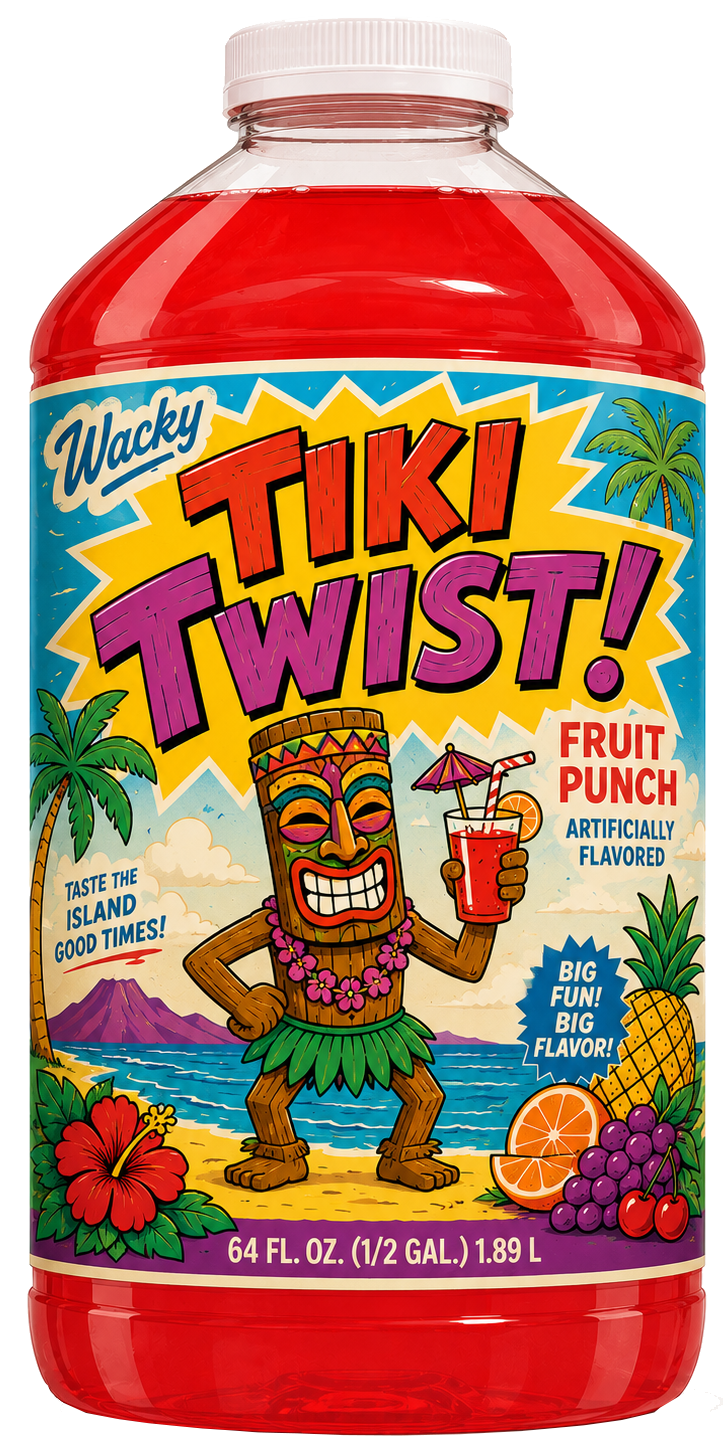
1 The earliest mass marketed tropical fruit drinks were often aimed at children. (AI generated under the direction of SSCS).
In the meantime, adults had started to show fatigue with tiki culture. Hunkering down with an indulgent cocktail in a dark grotto of fantasy was beginning to lose its allure, and there were reasons for that.
The first was the late 1970s fitness boom, fueled by the rise of jogging, recreational sports, and aerobics.[1] The new emphasis on health encouraged non-alcoholic drinks, and vendors were anxious to tap into the market.
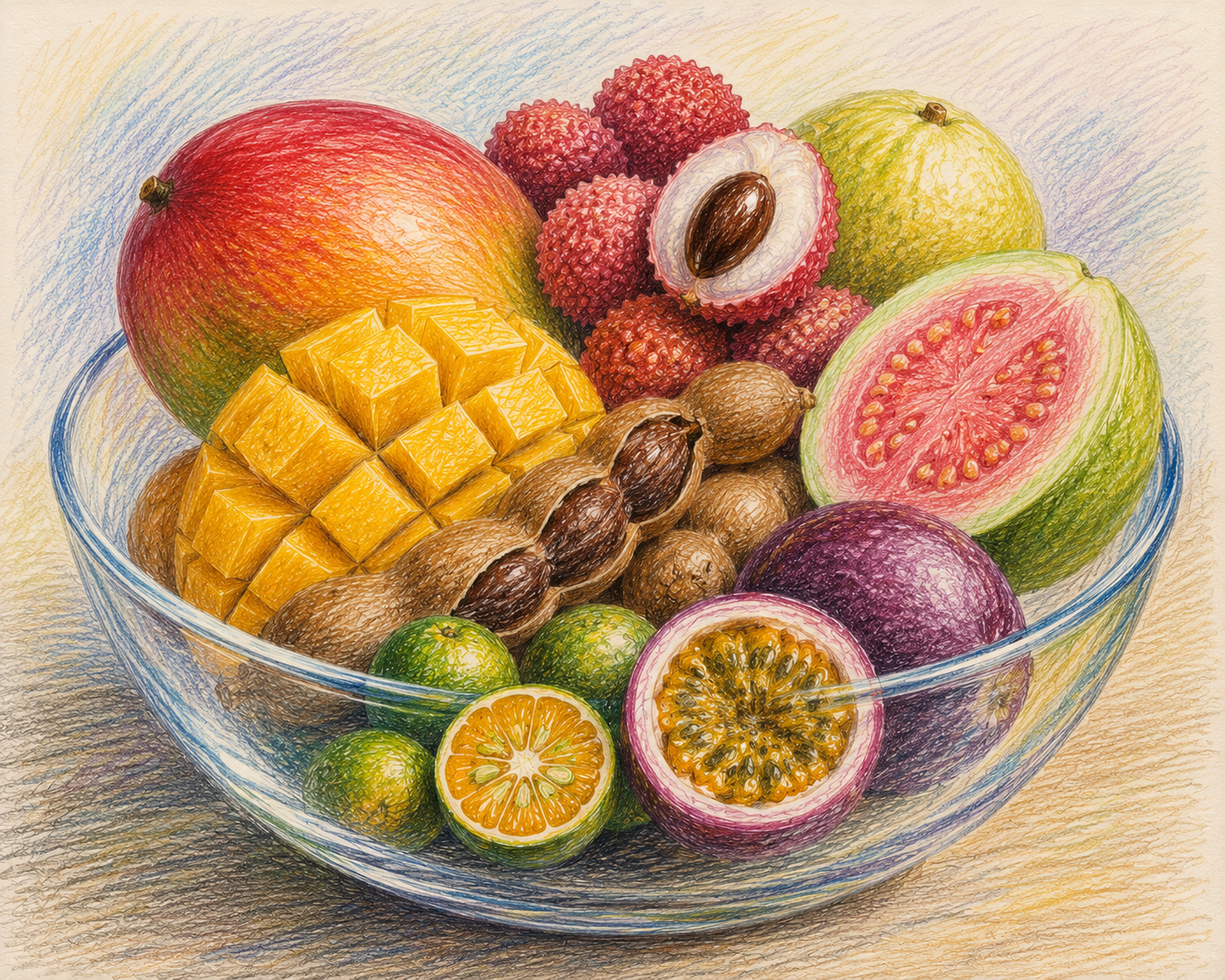
Exotic Fruit from Faraway Lands
The second, and likely the factor most responsible for the explosion of non-alcoholic tropical drinks, was the sudden influx of exotic fruit—the real thing!— from every corner of the world. Expanding trade policies, together with late 20th Century improvements in technology and logistics made it possible.
In addition to pineapple, fruit punch, and coconut milk, consumers now had access to drinks made with mango, guava, lychee, tamarind, and calamansi—inventory once only carried by specialty import markets. The new flavors really changed things up. Mexican Aguas frescas, Indian Mango lassis, and Vietnamese Chanh Dây were the real deal, not someone’s fantasy.
It All Comes Together
Today, wellness culture and the expansion of tropical ingredients continue to combine to create—many times over— new, notable products.
Coconut water is a good example: an old school tropical flavor reinvented in the form of a hydration beverage. Tropical flavors have also migrated into functional drinks, enhanced waters, and energy beverages; as well as sparkling waters, sports drinks, and ready-to-drink teas. It gives the consumer lots of options. And it provides opportunity for a c-store.
As is the case with any new product, though, a convenience store operator has to see if it works for their business. And that can’t be done unless its performance is watched closely enough to determine whether the new UPC is moving off the shelves or gathering dust; whether its priced right, or its margins need adjusting. You can’t wait to find out information like this, either, or the damage to your bottom line may already be happening.
To assist you in managing your exciting new UPCs (and your old reliable ones), we’d like to suggest you consider SSCS Technology. Our complete line of C-store software has been assisting in inventory management since before tropical drinks became a sensation. If you’d like to know more about the potential benefits out solutions offer, please give us a call at (800) 972-7727 Until then, aloha!
[1] Wikipedia states that 25 million Americans took up jogging during this period.



Leave A Comment