
A Vacation in a Glass (Tropical Drinks—Part 1)
From exotic cocktails to probiotic guava punches, the tropical drinks that capture America’s imagination have changed with the times.
Americans have had a love affair with tropical drinks for approximately 125 years, and why not? Such beverages add a touch of the exotic to our lives. From invention of fruity cocktails at the turn of the 20th Century, to today’s health-focused macrobiotic juices, the nature of the public’s fondness for the tropical drink has changed over time, but never diminished, even as it has gone through distinct phases.
Phase 1. Lifestyles of the Rich and Famous
From the beginning of the 20th Century up until Prohibition (1920–33), the tropical drink was mostly exclusive to wealthy adults, many of them international travelers. Slow communication modes and long transit times made these drinks “exotic”: they came from faraway places and were hard to get, making them expensive. Even the rum used in most of these drinks conjured up images of pirates and trunks buried in Caribbean sands.
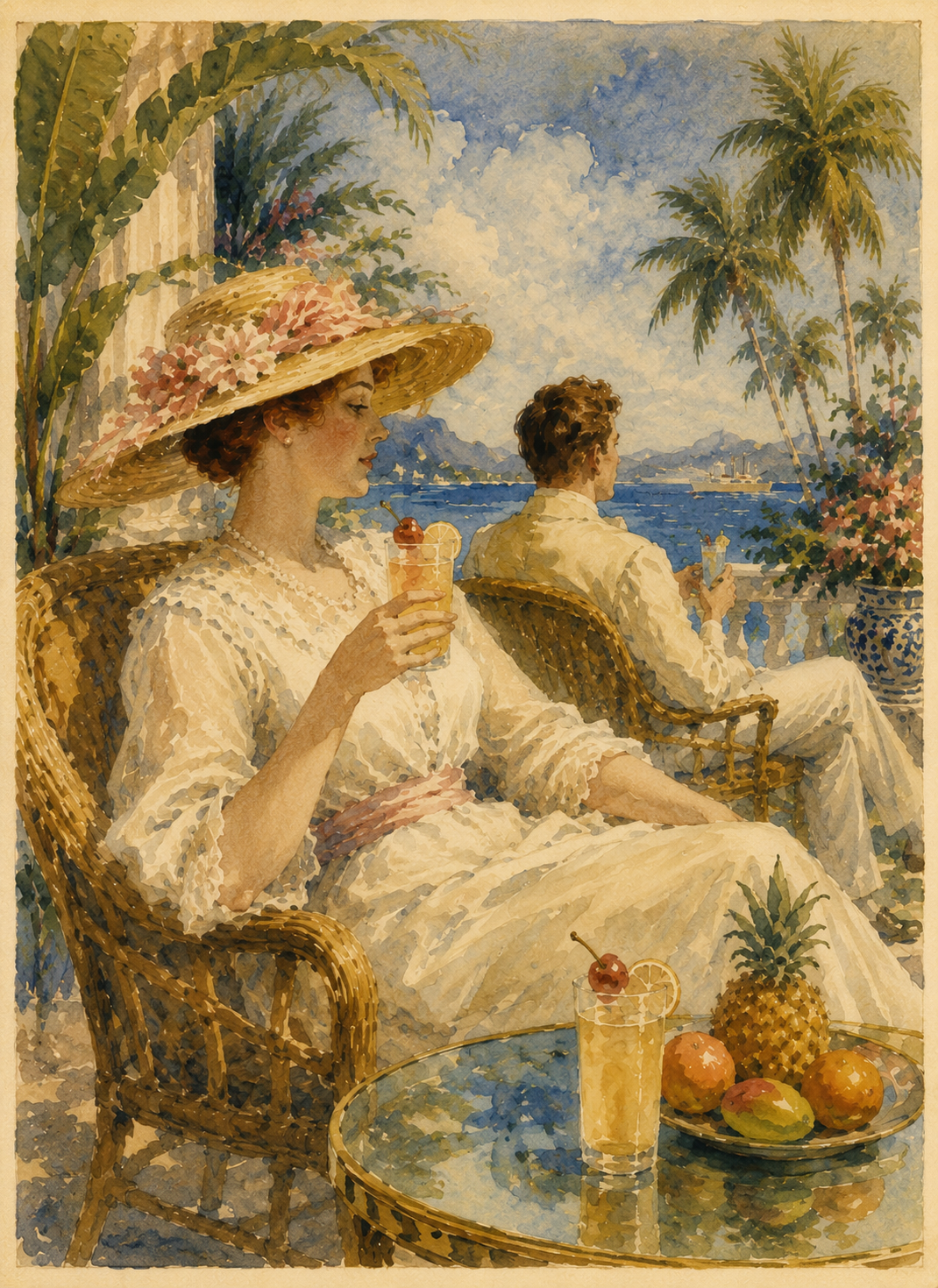
1 On the Veranda, Circa 1910. AI Generated
That turned tropical drinks—made with mostly pineapple and citrus at the time—into a status symbol served in elegant hotels and clubs, or on luxury steamships. When passengers returned home, they sought out these recipes as a reminder of their experiences, and popularity spread for these kinds of drinks.
Phase 2: Fantasy Island
During Phase 1, tropical drinks were judged by how authentic they were; the locale from which they came made them exciting enough on its own.
By the time Prohibition was repealed in 1933, though, communications technologies had made the world a smaller place; less mysterious. A new generation of American entrepreneurs felt the need to build out their own version of a tropical fantasy, with theme park-like results, perhaps to contrast with the grimness of Great Depression.
Two groundbreaking restaurant/bars came out of this trend in the 1930s: Don the Beachcomber in Hollywood and Trader Vic’s in North Oakland, California. Part of the fantasy they sold was reflected in the fruit drinks they made now that they no longer felt obligated to duplicate authenticity.
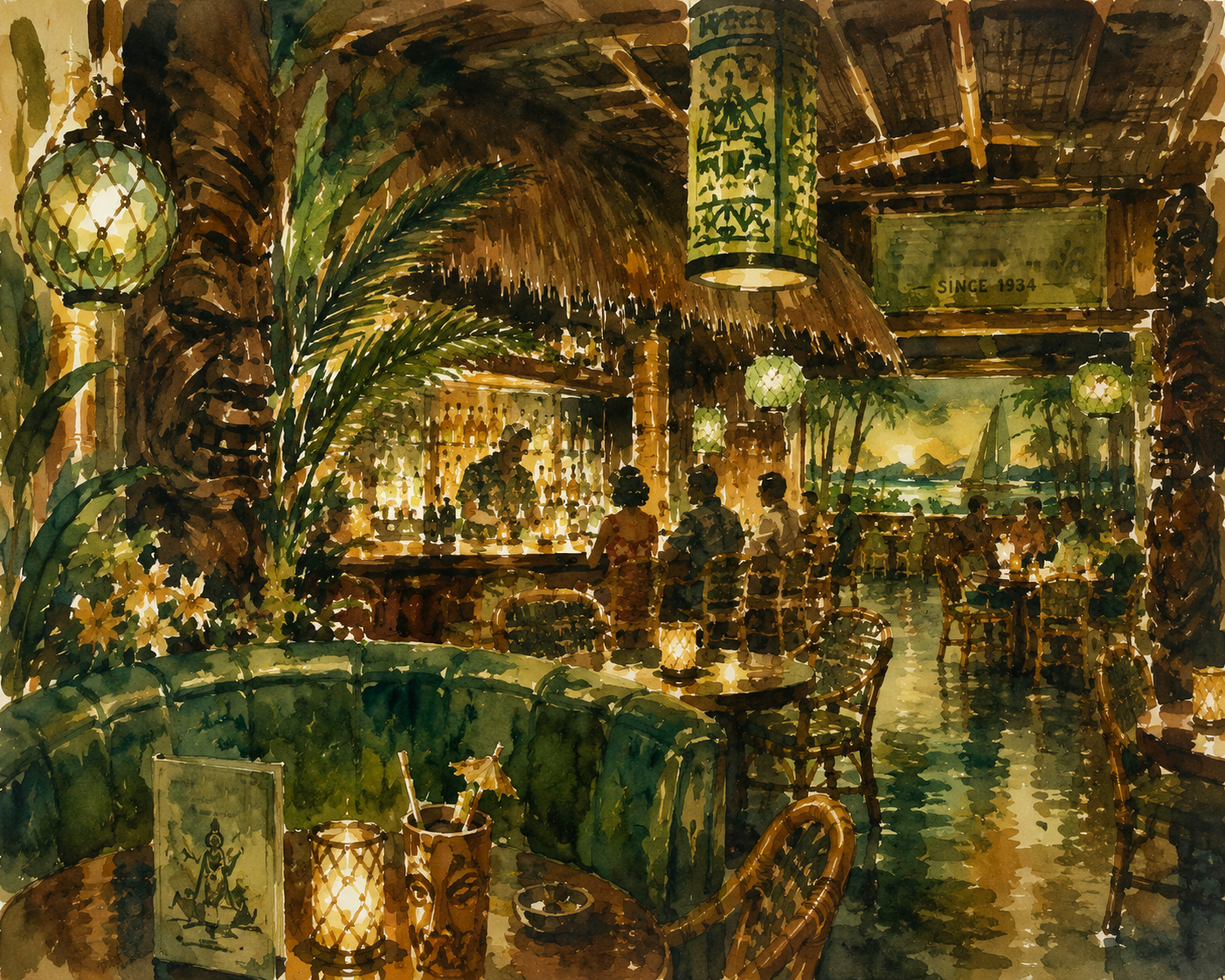
Don the Beachcomber’s Donn Beach (Ernest Raymond Gantt), a particularly noted mixologist, is on record as creating drinks like Navy Grog and the Zombie[1]. Though somewhat of a more mythical assertion, Trader Vic’s is usually identified as creating the Mai Tai.
Phase 3. The Tiki Lifestyle Craze
With the advent of the tiki bar, the tropical drink had definitely moved closer to the American mainstream, but nowhere near to the extent that it would after WWII and through to the 1970’s, when tiki fever experienced steep decline.
Servicemen coming back from the war after being stationed in Hawaii and serving in the Pacific Theater brought first-hand experience in these places back with them igniting a new round of fascination among the public. What made it different this time, though, was that civilian travelers could go back and visit these areas themselves, thanks to cheap reliable air travel.
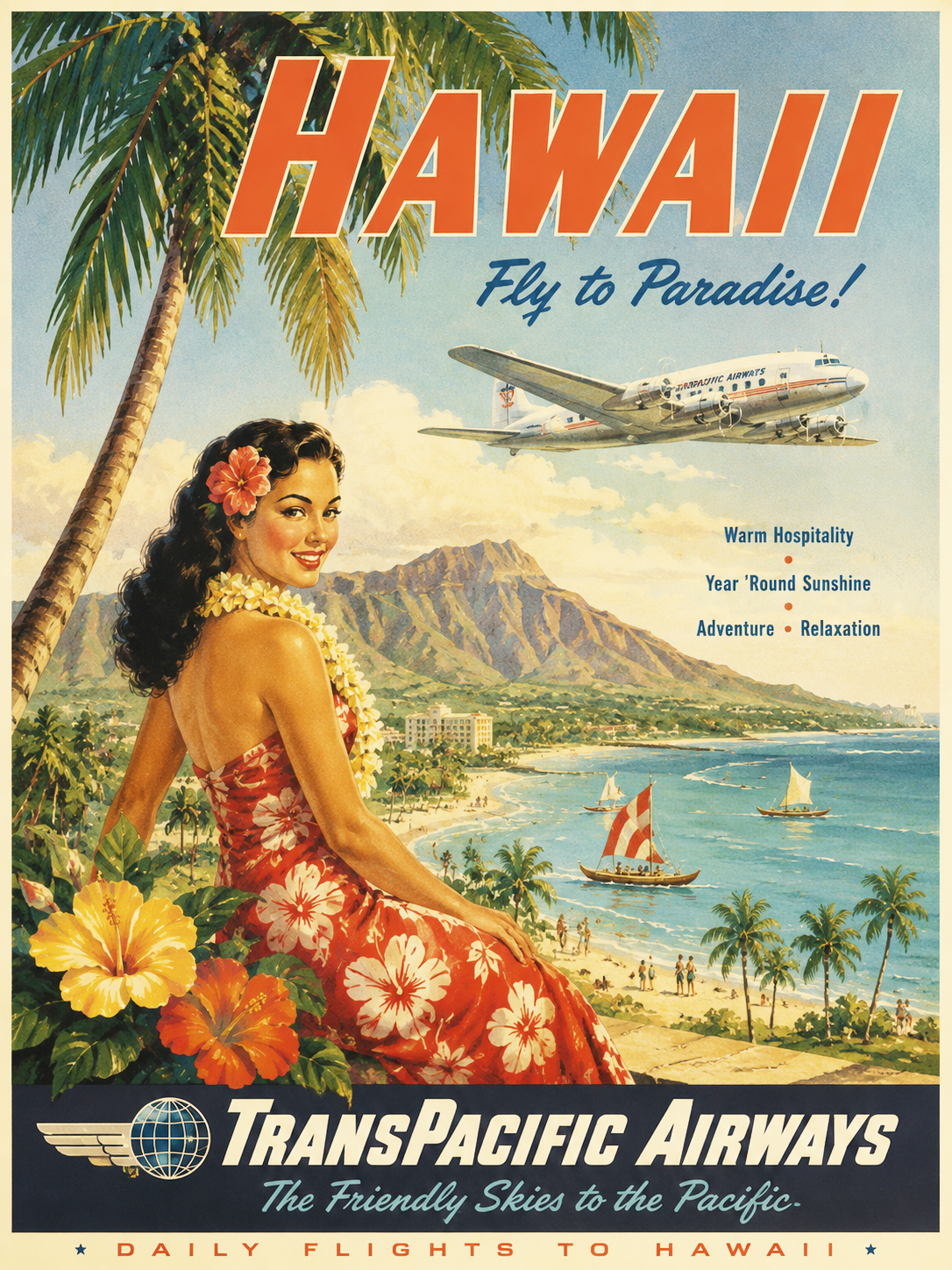
Thus began the Golden Age of the Tiki lifestyle. Individuals decorated their homes with bamboo furniture, tiki carvings, and tropical plants. Surfing became popular. Heck, Hawaii even became a state in 1959 during the peak part of the craze.
But even though cocktails play a central role in the history of the tropical drink, we should make it clear that the two terms are far from synonymous. Beginning in the 1950’s we begin to see a shift: tropic-themed non-alcoholic drinks on grocery store shelves. Canned pineapple juice, fruit punch drinks, canned fruit cocktails, and varieties of coconut juice were among the pioneering products. In fact, by the time the Seventies began to roll around, most tropical drink innovation was decidedly not built around the bar scene.
As we’ll see in next week’s SSCS Blog, the flavors have remained remarkably consistent and so has the consumer’s enthusiasm for seeking out a vacation experience in a glass. In place of rum-heavy concoctions, though, today’s c-store cutomers are embracing coconut waters, mango refreshers, and fruit-forward functional beverages that deliver hydration, energy and wellness, and that’s just a start. We’ll explore why this happened and how it developed going forward in Part 2.
[1] Wikipedia entry on Donn Beach.



Leave A Comment