
Breakfast in America (Part 2 – The C-Store Re-Creates Breakfast)
Are you a fan of retail innovation? You need look no further than the c-store breakfast.
Life Moves Fast
Part 1 of this two-parter covered the evolution of breakfast from the Pilgrims at Plymouth Rock until now. We saw how over time the morning meal was driven by changes in the American lifestyle.
By the time the sixties rolled around, those lifestyles had quickened considerably. There’s a lot of reasons for that,[1] but what’s relevant is that it created a demand for convenience retail. Once that happened, it was only a matter of time until the industry capitalized on serving a meal more and more Americans were struggling to fit in.
Revolution in a Cup
The c-store’s influence on breakfast began humbly enough with the introduction of coffee-to-go in the mid-sixties[2]. It seems simple and small, but it was a public sensation. More than that, it was a proof of concept in a cup: customers really, really liked getting in and out of a store fast to start their day. Grab-and-go was born. Operators noticed, and began to expand the scope of what that concept meant.
That first wave of the breakfast revolution doesn’t look that fancy to us today, with pastries and quick-heat packaged food items, and the microwave making its debut as more or less specialized tech—you wouldn’t find one in the grocery store down the street.
But it created market distinction before it became a buzz phrase. Industry leaders wasted no time taking it further, adding more to their morning repertoire. In 1970, Stop N Go Markets of Memphis, Tennessee reported that its stores making fresh doughnuts were selling 15–18 dozen per store per day[3].
A Springboard into Foodservice
In 1972, McDonald’s introduced its wildly successful Egg McMuffin, which imprinted the concept of a fast, rounded breakfast in the public’s[4] imagination, making it a staple of the American fabric.
The c-store industry took notice, saw the potential on which they were already partly capitalizing, and went to work. Grab-and-go was still a viable concept, but additional food items were added to the mix. By the 1980s many of the c-store breakfast concepts with which we’re familiar today were appearing.
In addition, more attention was given to the space in which food items could be grabbed or, with more and more frequency, consumed onsite. Even a few early mentions of “Food Service” (still two words) were beginning to pop up. In 1984, the first modern Foodservice operation made its debut in a convenience store,[5] also featuring a restaurant-styled dining area.
The industry’s commitment to breakfast would only deepen. The days of just being a place to run in and out with coffee and food in hand had evolved into something broader—and that doesn’t do justice to the scope of the options available during a morning c-store rush.
The Many Faces of Breakfast
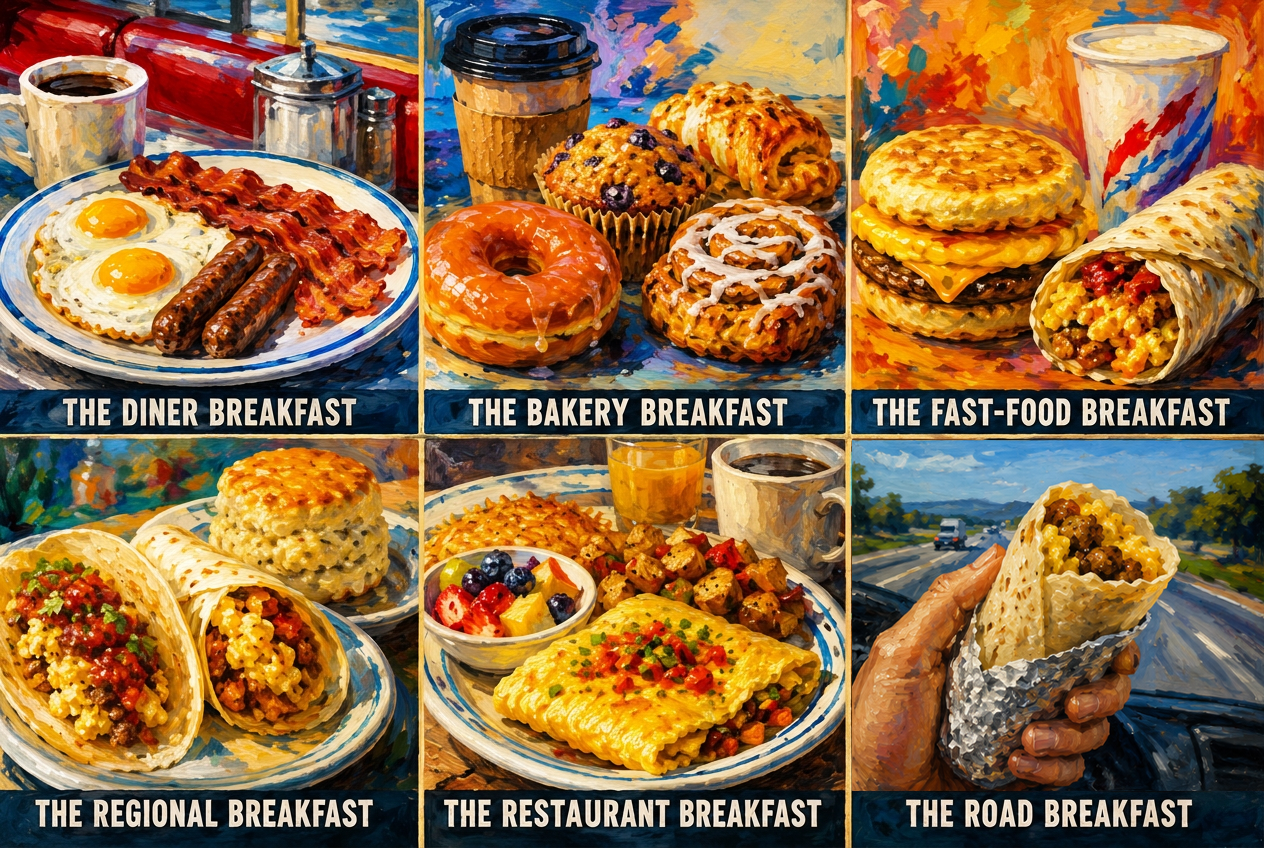
You’ll find breakfasts that are as varied as the operations and markets they serve. Breakfast pizzas, tacos, burritos, made-to-order eggs, wraps, bakery programs, all-day breakfast, and even sit-down, built-in diners are part of the landscape now. These innovations have been fully embraced by the industry, and in some cases have become associated directly with it.
Today, it’s not an exaggeration to say that, when you take in all the different variations on the breakfast theme, you can find any style of American breakfast in a U.S. convenience store.
Breakfast isn’t the only thing that’s changed in the convenience store industry, but it’s a good example of its growing complexity. Recipes and ingredients need to be meticulously tracked. So does spoilage and waste. An operator is obliged to offer variety, yet needs to understand how it all comes together in a consolidated set of performance views.
Having the right technology is critical, something that can pin down the details of how food merchandise is working without requiring a decision-maker to drown themselves in data.
SSCS technology has been helping owners and managers accomplish simplification of convenience retail management for close to 45 years with a suite of tools, including the Computerized Daily Book back office, that can pull all this information to you and serve it up to you every day. Don’t be penalized by broadening your store’s approach. Give SSCS a call at (800) 972-7727, and we can go over how you can avoid it.
[1] Although if you’re interested, this article from the University of Chicago Press explains it in a very readable way.
[2] “You Are What You Eat: The All-American Breakfast”; no author listed; Oxford University Press; September 11, 2006
[3] “40 Years of Convenience Retailing: 1969-1973”; no author listed; Convenience Store News; February 1, 2009.
[4] “You Are What You Eat”; ibid.
[5] Don Longo, “25 Years of Leadership: 1992 to 1996’ Convenience Store News; November 8, 2011.



Leave A Comment