
Breakfast in America (Part 1 – The Great American Breakfast)
The classic diner breakfast serves up Americana in all the right ways.
The Great American Breakfast
Citizens from other countries sometimes display a fascination with America’s approach to breakfast. One British band was so taken by it, that they wrote a song and titled a best-selling album in its honor.
Hotels around the world routinely distinguish between a Continental Breakfast, an English Breakfast, and an American Breakfast—the later almost always means pancakes, bacon, eggs, hash browns, and endless coffee.
In other words, the classic diner breakfast; the Great American Breakfast.
This globally iconic meal didn’t materialize out of thin air, though; the Pilgrims weren’t exactly serving up hash browns and breakfast burritos at Plymouth Rock. No, the Great American Breakfast developed over time, and like so many other good things to come out of the U.S., streamed together from a variety of sources into a blended pot (or skillet, if you will).
A Culinary Map
While there are probably dozens of regional micro-influences on breakfast in the U.S., for practicalities’ sake, we’ll concentrate on the most predominant ones. You can even map them out to an extent:
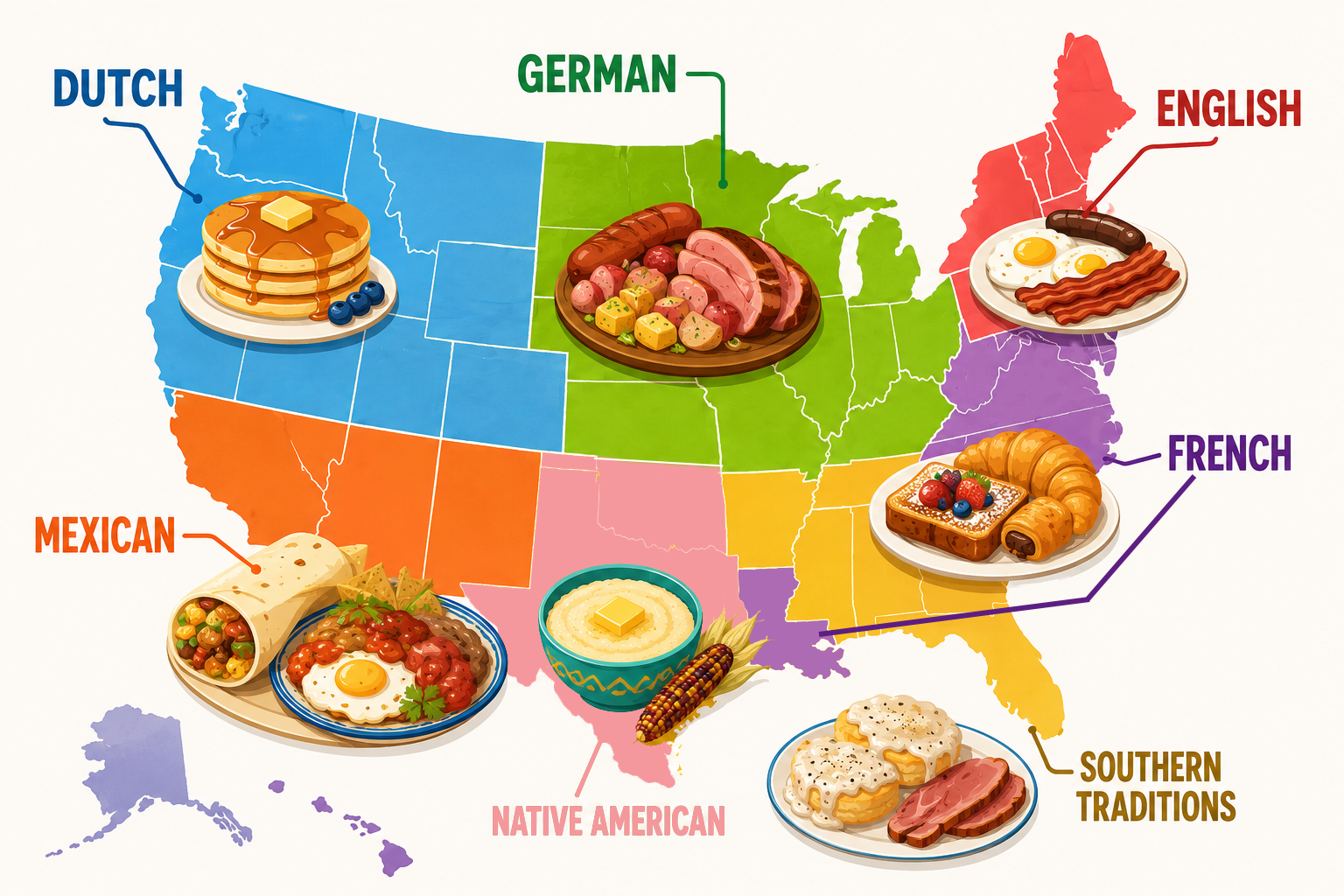
English: Eggs, Bacon and Sausage
Eggs and bacon had appeared together in Britain by the 17th century, crossing the Atlantic with British settlers. Thanks to industrialization, transportation, working hours, food distribution and changing lifestyles, by the 19th Century the full breakfast had become a thing. This was especially around New York City, where a successful, high profile succession of early commercial restaurants started to appear with overwhelming success.
German: Smoked Meats and Potatoes
German immigrants brought a strong tradition of pork, sausage, cured and smoked meats to America, along with potatoes and a torrent of approaches to baked goods. Farm life in rural America called for generous caloric intake in the morning, and these foods generally fit the bill. Traditional diner breakfasts are known for their heartiness. Farming and German settlers are a definite influence in that regard.
Dutch: Pancakes and Waffles
Dutch settlers helped establish griddle cakes and waffles. Interestingly enough, waffles got retconned when they landed on American shores: they went from being a European feast or dessert food into a breakfast favorite, especially when served up with maple syrup or molasses. FYI, buckwheat pancakes likewise became enormously popular in the 18th and 19th centuries as good, hearty food for inland settlers and other pioneers.
French: Toast and Pastries
French food influence came through several routes, Louisiana being one of the more dominant. Pain perdu—literally “lost bread,” made from stale bread soaked in an egg mixture—became American French toast. French settlers also gave American breakfast the beignet, and any number of baked goods and pastries, most famously, the croissant.
Native American: Cornmeal and Grits
Corn was already a foundational North American food long before European settlement. Native peoples taught colonists how to grow and process corn, and cornmeal became the basis for mush, johnnycakes, hoecakes, corn pone and related breakfast foods. In the South, the tradition evolved into grits, a defining breakfast food of the region.
Mexican: Huevos Rancheros and Breakfast Burritos
Mexican influence shows strongest in the Southwest, but the spread of breakfast ideas from our Southern neighbors has made it to most of the U.S. Tortillas are viable alternatives to rolls and pastries. Huevos Rancheros have become a flagship breakfast dish, as have breakfast burritos. Salsas are early morning garnishes subbing in for jams and jellies.
Southern: Biscuits, Gravy and Country Ham
Southern breakfast is another artery of the Midwest’s stream of inexpensive, filling ingredients, with its own distinct spin: biscuits, pork, gravy, and grits, while country ham and red-eye gravy reflects the region’s long tradition of preserving pork.

American Breakfast: Current State
The Great American Breakfast is in better shape than ever before, not just because of the continuing influences we’ve covered here, but because of the innovation of food retailers who constantly try out new versions of traditional fare, and come up with pleasing environments in which to serve them.
High on this list is the modern c-store, who has come to embrace breakfast items as a reliable revenue stream, as well as a way to create market distinction. In fact, the industry is responsible for any number of food item innovations, raising the bar for what “c-store breakfast” really means. We’ll explore convenience retailing’s considerable influence on breakfast in the modern world next week in Part 2 of this two-part SSCS Blog Post, and also take note of some of its interesting variations.




Leave A Comment