
One Tea to Rule them All
The endless variety of available teas come from a single species of humble-looking tree.
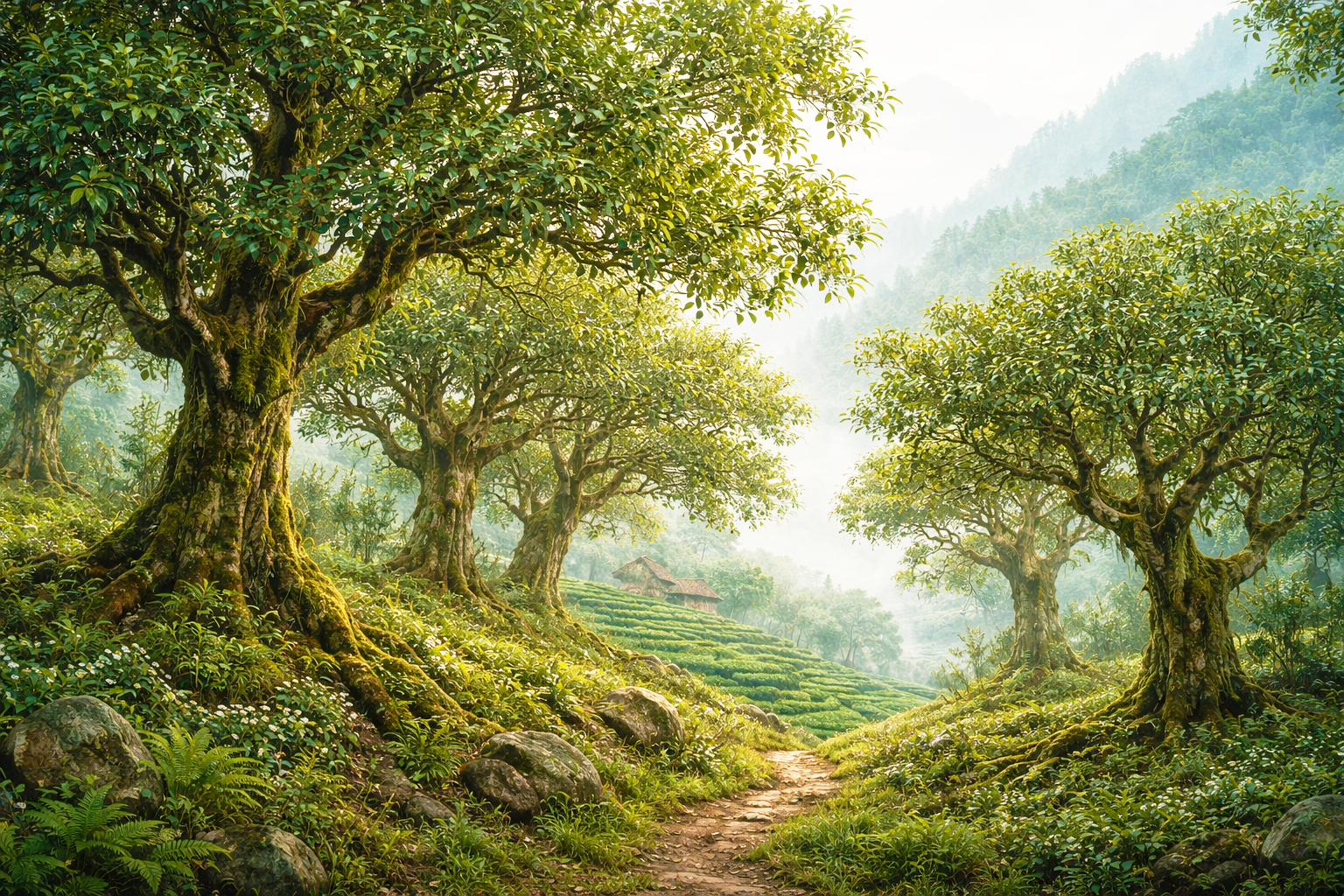
Wild tea trees still grow in the Yunnan, Sichuan, and Guizhou regions of Southwest China, just like they did 2,000 years ago. That’s when cultivation of tea began—before agriculture had even come together as an identifiable practice.[1]
The ideal climate in this area was a major reason tea first emerged here. Mild, steady temperatures, high rainfall and humidity, altitude, fog, and soil acidity combined to create the type of microclimates that not only protected tea plants, but produced the lushest possible leaves for maximum flavor[2].
The nature of Chinese medicine also profoundly influenced tea’s rise, with its established emphasis on steeped remedies, herbal tonics, and other restorative broths. It wasn’t too much of a stretch to brew the leaves from the local trees, make a beverage out of it and see how it tasted, or what effects it might have.
The new drink proved such a sensation, that by 300 B.C.E. tea was one of the main exports that helped create a normalized trade route out of China and toward Central Asia and the Tibetan Plateau.[3]
As it was in the beginning, there is only one true tea plant, camellia sinensis. The many varieties of tea products available throughout history, and in retail and specialty outlets today, are strictly the result of cultivation and processing; it’s a little like brewing beer or making wine in that way. Leaf age, micro-climates, and oxidation (a process akin to fermentation with several additional steps) are all factors that affect the end result. Here’s a table listing some of the most common teas and how they are distinguished from each other.
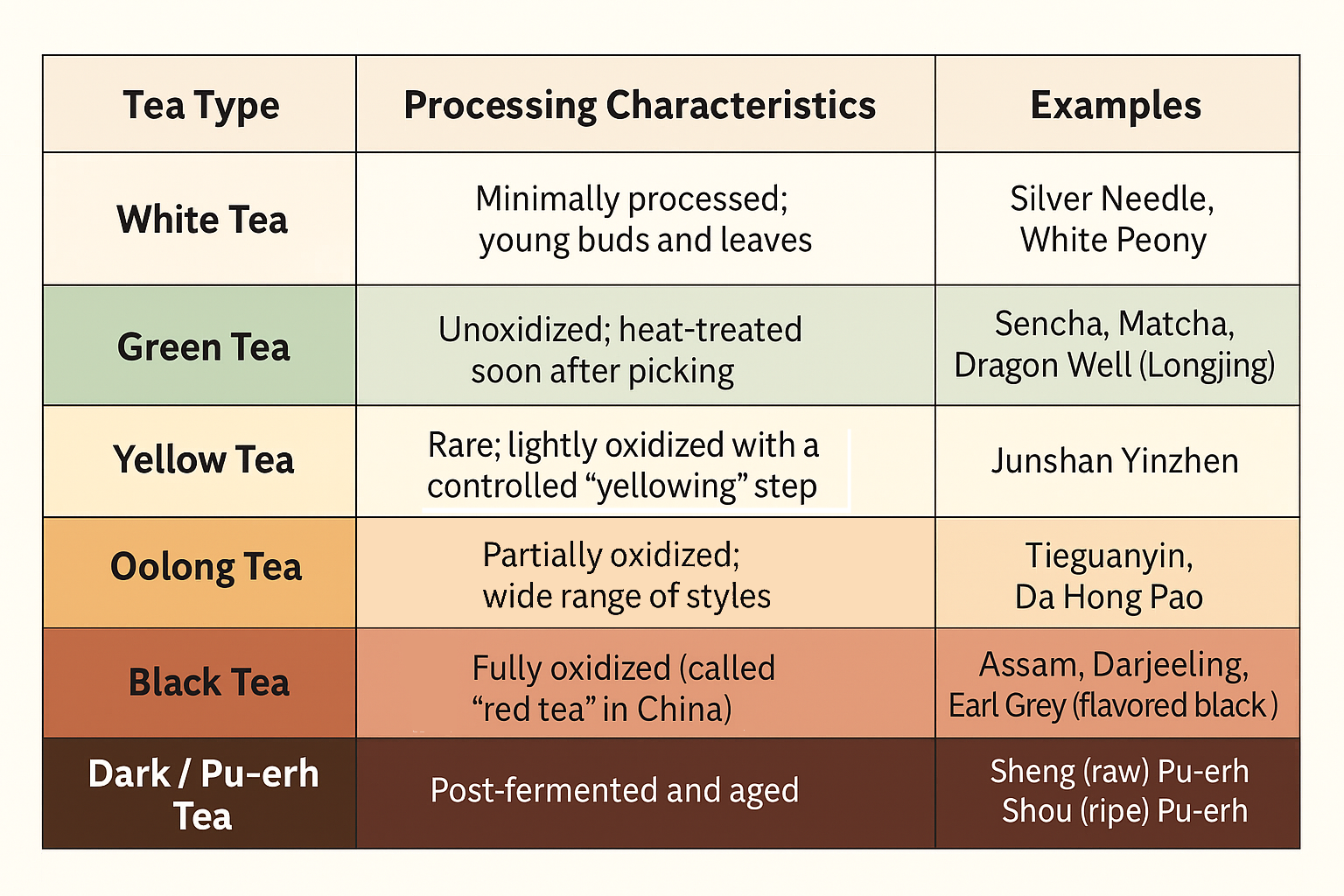
You’ve probably noticed, by now, that some beverages commonly referred to as tea do not appear on this list, including popular ones like chamomile, peppermint, hibiscus, and ginger. That’s because they’re not teas: they aren’t made from camellia sinensis. Beverages like these are called infusions: liquids made by soaking various plant material— leaves, flowers, roots, bark, fruit—in hot water.
The appeal remains. Today teas and infusions have gone from a regional plant steeped for practical purposes, to a global category that shows up everywhere from hot dispensers to refrigerated coolers to single-serve pods. As their popularity expands, customers will be coming to convenience stores expecting their tea drinking options to be up-to-date, easy-to-find, and consistently stocked.
That’s where SSCS software comes in. Our back office system offers powerful inventory management tools that help ensure optimize the profit from teas and other infused drinks by helping you stay on top of what’s moving and what’s not, while providing analysis that helps an experienced operator anticipate changes in product mix as tastes evolve and product formats change. If you want more information on how to handle your tea and other merchandise consistently without disrupting your day, give us a call at (800) 972-7727.
[1] “Where Did Tea Originate?”; author uncredited; teateapot.com; July 7, 2025.
[2] “Distribution of Tea-Producing Areas in China”; Fucha Zhixin; jiemian.com; February 26, 2017.
[3] “Earliest tea as evidence for one branch of the Silk Road across the Tibetan Plateau”; abstract; National Library of Medicine; January 7, 2016.





Leave A Comment